
We Need To Talk…
The 2027 phase-out of mercury and metal halide bulbs is getting closer, which means now is a very good time to start thinking about your long-term illumination plans.
Not panicking, not running dramatically through the lab clutching a box of spare bulbs. Just planning.
From 24 February 2027, replacement mercury and metal halide bulbs are expected to become increasingly difficult to source, with new bulbs no longer being manufactured or placed on the market under existing exemptions. Existing systems will not suddenly stop working, and labs will not be forced to switch everything off overnight, but replacement bulbs are likely to become harder to find, more expensive and less reliable as a long-term option.
In short: you don’t need to panic. But you probably do need a plan.
Take stock before the stock runs out
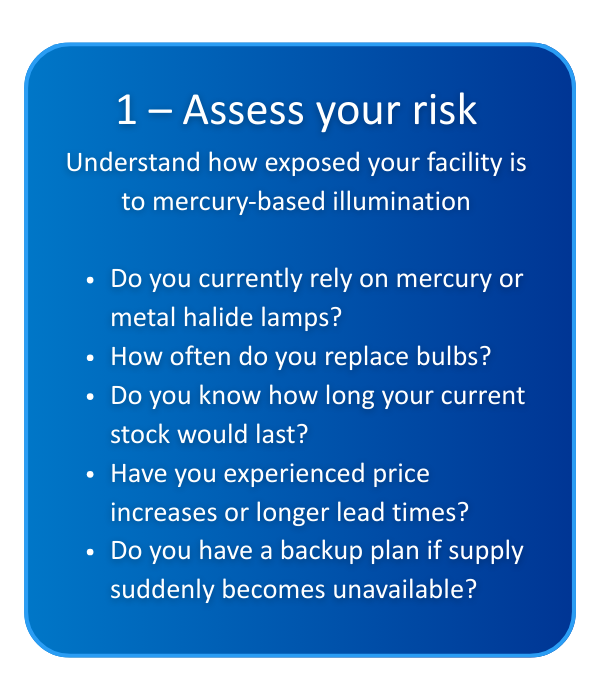
Before making any decisions, it is worth doing a quick bulb audit.
Nothing too dramatic. No clipboard required, unless you enjoy a clipboard, in which case this is very much your moment.
Start by working out:
- how many mercury or metal halide bulbs you currently use each year
- how many spare bulbs you already have in stock
- how many microscopes still rely on those bulbs
- how quickly each system gets through them
- whether any high-use systems are likely to run short first
This gives you a much clearer idea of how long your current supply might last, and when things could start to look a little tight.
To make things a whole lot easier, we’ve created this free-to-use calculator to help give you a better view of what your bulb future looks like…
Calculate how long your current mercury / metal halide bulb stock will last
Takes less than a minute. No data is stored.
Start the conversation
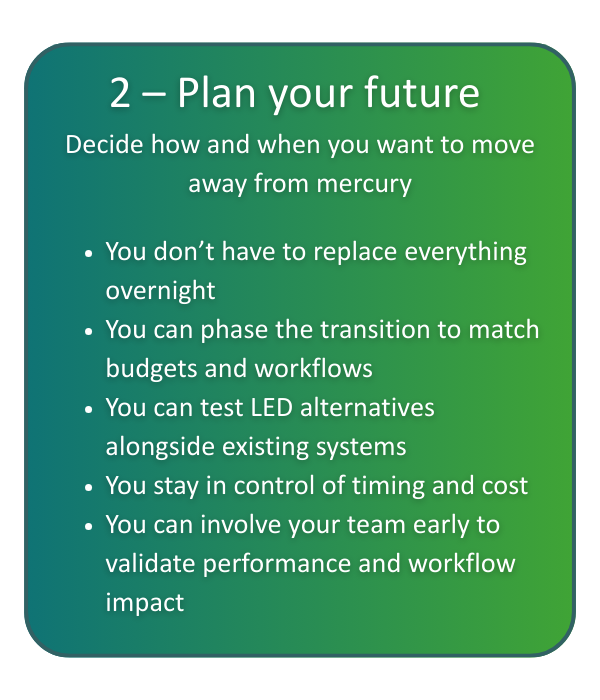
The best transition plan will depend on your microscope, your application and how your system is used. A small teaching lab may need something different from a shared imaging facility. A routine fluorescence setup may have different priorities from a high-performance research system.
That is exactly why it helps to talk it through.
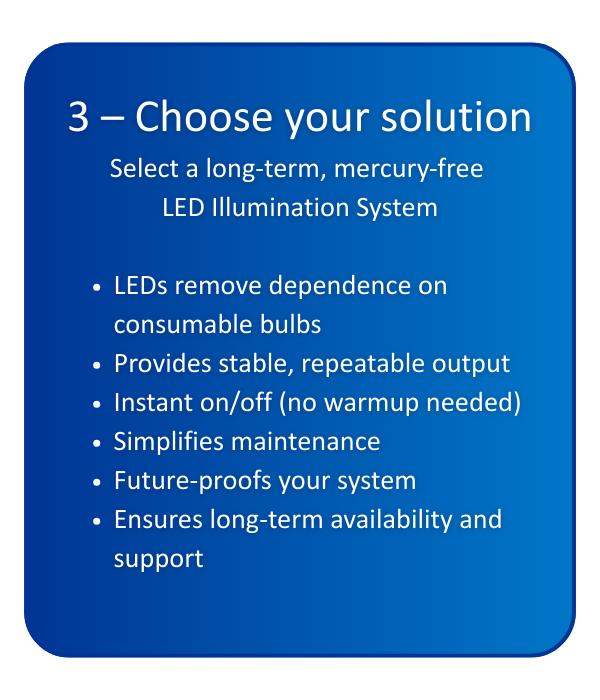
We’ve created a dedicated contact form for anyone with questions about the 2027 phase-out, LED replacements, loan unit demos, quotations or mercury-free illumination options.
Whether you are ready to switch now, starting to budget, or simply trying to work out what is currently attached to the back of your microscope, our team can help.
The move from mercury or metal halide to LED does not need to be rushed, stressful or complicated.
But it does need to start somewhere.
Written by Ben Furness / ben.furness@coolled.com / LinkedIn Profile