
Why Imaging is Moving into NIR and SWIR
Visible light is useful. We’re all quite fond of it because it helps us see things, which is generally considered a strong feature.
But in advanced imaging, visible light is often only part of the story.
A surface may look clean while still holding moisture. Two plastics may appear identical but respond differently at longer wavelengths. A silicon wafer may look flawless on the surface while hiding defects underneath. In life sciences, visible fluorescence can sometimes be limited by scattering, autofluorescence or poor contrast in complex samples.
That’s why more imaging systems are moving beyond the visible spectrum and into near-infrared and short-wave infrared wavelengths.
Once you move past 1000 nm, and in some cases towards 1900 nm and beyond, light can start to reveal information that visible imaging simply can’t.
Industrial imaging: seeing what visible light misses
In industrial inspection, NIR and SWIR wavelengths can be especially valuable because they can reveal features that are difficult, or impossible, to see under visible light.
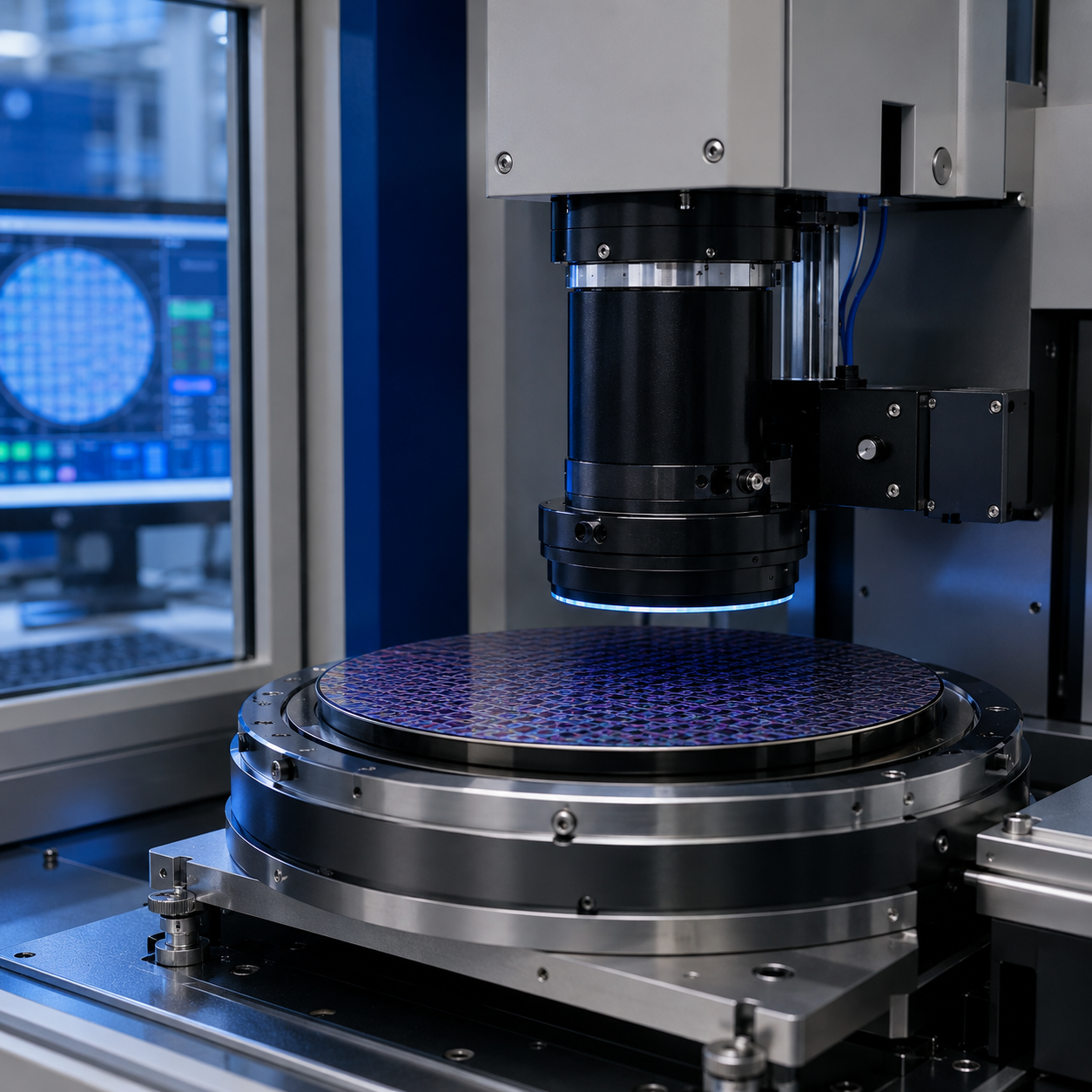
In semiconductor inspection, for example, longer wavelengths can help inspect below the surface of silicon. This can support detection of cracks, voids, bonding issues and other hidden defects. A defect you can’t see is still very much a defect. It’s just being a bit more covert about it.
In plastics sorting and recycling, NIR and SWIR imaging can help distinguish between materials that look similar to the human eye. That’s useful when the difference between two polymers matters more than their shared ability to look vaguely bottle-shaped.
Longer wavelengths are also useful for moisture detection, food inspection, coatings, films and advanced materials. Water has strong absorption features in parts of the NIR and SWIR regions, making these wavelengths useful for spotting moisture, checking drying processes or identifying contamination.
Life sciences: improving contrast and reducing background
Life science imaging can also benefit from moving beyond the visible range.
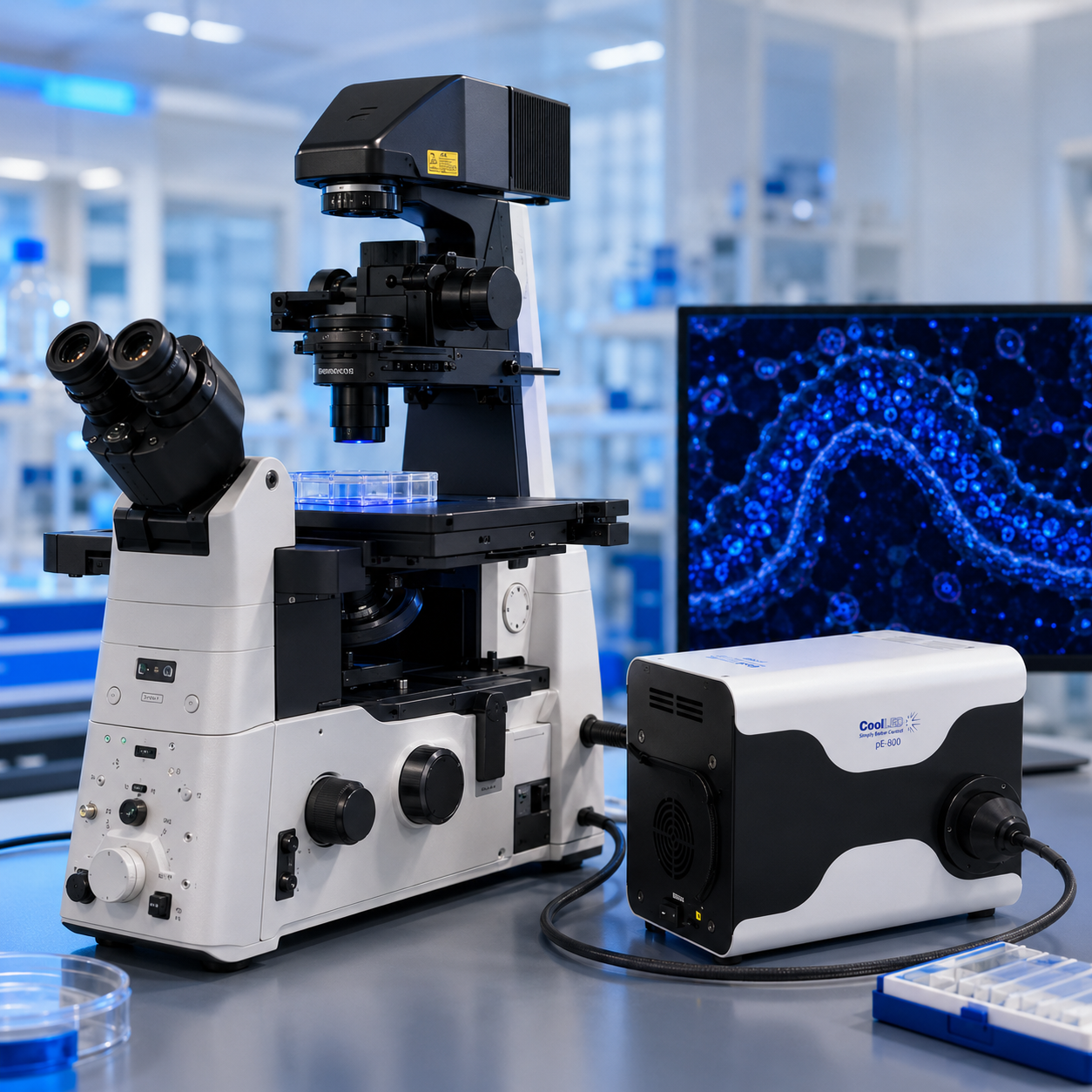
In biological samples, longer wavelengths can help reduce scattering and background autofluorescence. This can improve contrast, particularly in more complex samples where visible fluorescence may not provide the clearest signal.
NIR and SWIR wavelengths are increasingly relevant in areas such as:
- preclinical imaging
- deeper tissue imaging
- vascular imaging
- tumour research
- specialist fluorescence probes
The goal isn’t to “see deeper” just because it sounds impressive. It’s to access useful information more clearly, with better contrast and less interference from the sample itself.
Why it’s technically difficult
Of course, if all this were easy, everyone would be doing it, and engineers would have to find something else to look intense about near a whiteboard.
Moving into NIR and SWIR regions brings several challenges.
Standard visible imaging systems are often built around silicon sensors, which are not designed to operate far beyond the visible and near-infrared range. Once systems move past roughly 1000 nm, specialist detector technologies are often needed.
The illumination side is also more complex. Producing useful LED output at longer wavelengths is not as simple as choosing a different LED and carrying on as normal. Output power, heat management, optical efficiency, coupling, beam shaping and long-term stability all become more challenging.
The optics matter too. Lenses, fibres, filters and coupling methods can all behave differently across extended wavelength ranges. A design that works beautifully at one wavelength may need significant rethinking at another.
From possible to practical
At CoolLED, OEM projects often begin with an application challenge rather than a fixed product specification.
A customer may need a particular wavelength combination, optical output, coupling method or timing behaviour that doesn’t fit neatly into a standard illumination format.
That’s where the work becomes interesting.
As requirements move further into NIR and SWIR, the challenge isn’t simply to add more wavelengths. It’s to make those wavelengths useful, stable and practical enough for real instruments, production lines and imaging systems.
Sometimes that means extending wavelength coverage. Sometimes it means rethinking the optical path. Sometimes it means finding a way around a problem that initially looks like a firm “no”.
We prefer to treat those as “not yet”, which is similar, but much more useful.
Written by Ben Furness / ben.furness@coolled.com / LinkedIn Profile