

The wonderful world of fluorescence
From glowing scorpions to fluorescent jellyfish, discover the hidden colours of nature and how scientists learned to use them

One email a month with product news, applications, events and technical resources.
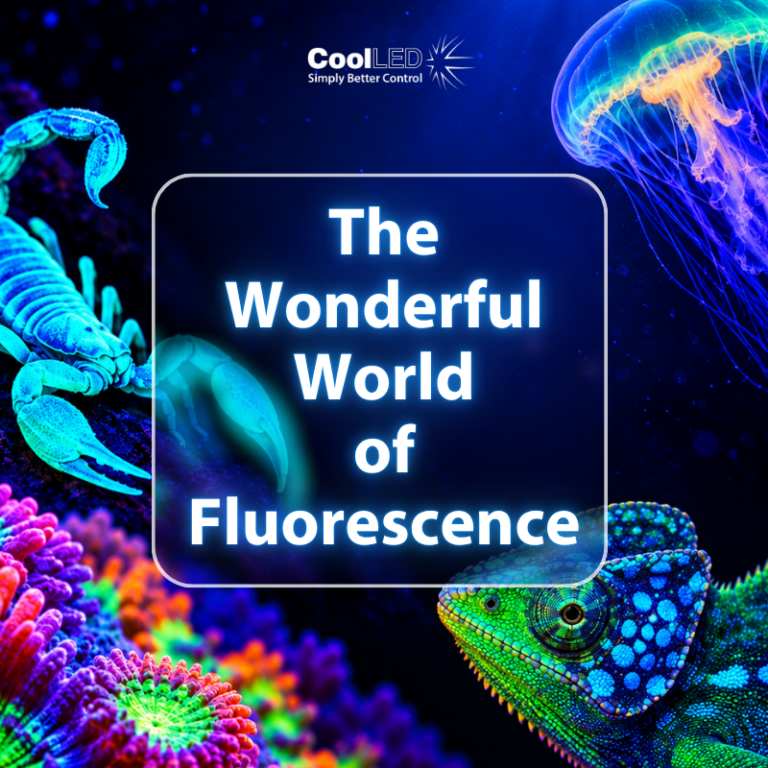
From glowing scorpions to fluorescent jellyfish, discover the hidden colours of nature and how scientists learned to use them
Why pulsed xenon has powered semiconductor inspection for decades, and why OEMs are increasingly turning to LED illumination instead
With just five months until the EU RoHS mercury exemption ends, NOW is the time to plan your move from mercury and metal halide to CoolLED LED illumination
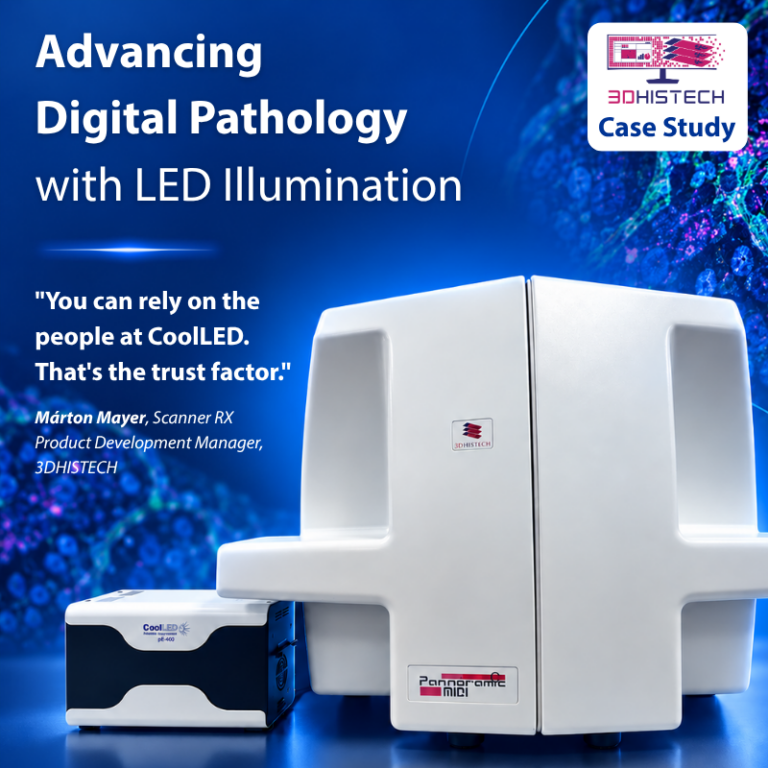
CoolLED and 3DHISTECH combine specialist LED illumination and digital pathology expertise to support faster, consistent fluorescence slide scanning
CoolLED and Camtek have partnered to bring a multi-wavelength LED illumination platform from development to in-fab qualification in just nine months

A closer look at how two human gut bacteria respond to nutrient stress, changing shape, behaviour and even cope better when they’ve got company
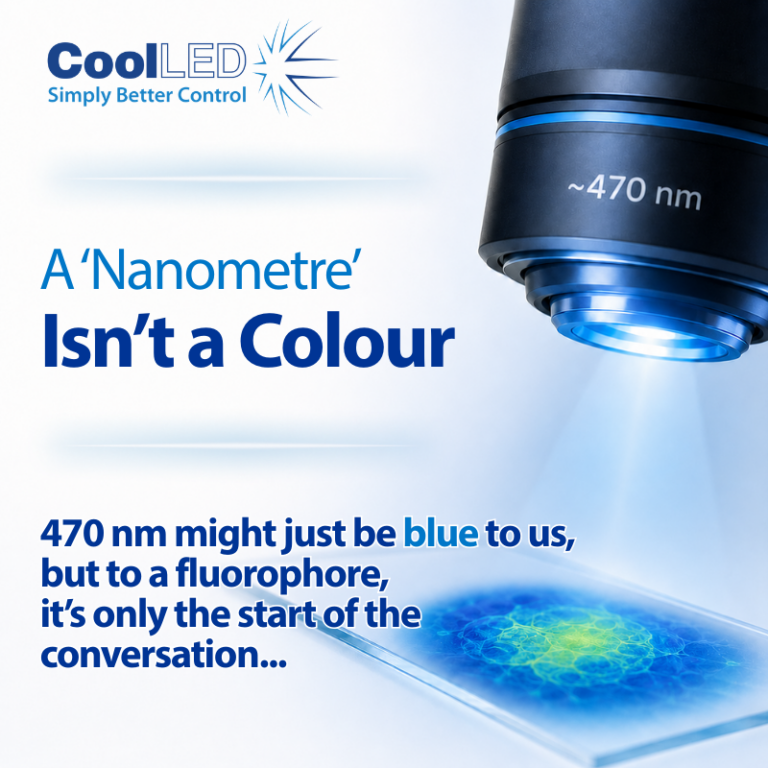
Why “blue” isn’t really specific enough in fluorescence microscopy, and why a few nanometres can make a surprisingly big difference

Why developing illumination for an OEM instrument involves rather more than choosing a bright LED, attaching a lens and pointing it in the right direction…

What actually happens between switching on the light and seeing an image? From LED illumination to fluorescence image, it’s a surprisingly busy day for a photon…

A day in the lab with metal halide versus LED illumination, from warm-up delays and heat to bulb changes, downtime and disposal

How LED illumination has helped make slide scanning faster, more consistent and better suited to modern multiplexed digital pathology

Follow a silicon wafer through months of lasers, plasma, microscopic layering and LED inspection to see how one of humanity’s most ridiculous manufacturing feats becomes a working semiconductor.
Need something a little different?
For manufacturers who wish to gain a competitive advantage through bright, stable and controllable illumination, CoolLED’s world-renowned LED technology is available in customised configurations.

Did you know that LED illumination systems help laboratories reduce their carbon footprint, protecting laboratory staff along the way?
Toxic mercury-based microscope illuminators are bad news for the environment, draw a lot of power and have a short lifetime.
LED illumination systems are cleaner, have a long lifetime and use less power. Our pE-300 Series is also ACT label certified and is a natural choice for labs who want to play their part in helping the environment.
At CoolLED we are committed to giving our customers outstanding service right from the start and throughout the lifetime of the product. Please get in touch if you have any questions or would like a quote. You can also browse our site for technical resources and general support.