

ACT Ecolabel 2.0 – Certified Again
CoolLED’s pE-300 and pE-400 Series have achieved ACT Ecolabel 2.0 certification, providing fresh independent evidence of their environmental credentials

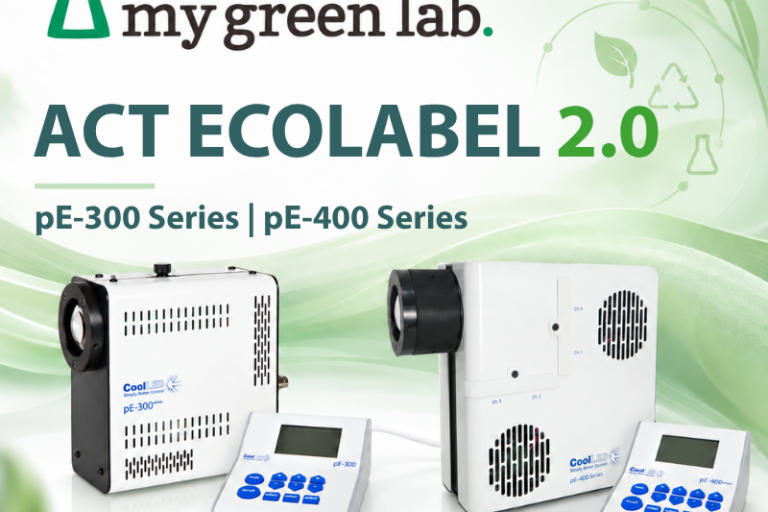
CoolLED’s pE-300 and pE-400 Series have achieved ACT Ecolabel 2.0 certification, providing fresh independent evidence of their environmental credentials

New independent evidence shows how switching from metal halide to LED illumination can cut energy use, running costs and maintenance over the long term
With just five months until the EU RoHS mercury exemption ends, NOW is the time to plan your move from mercury and metal halide to CoolLED LED illumination

A day in the lab with metal halide versus LED illumination, from warm-up delays and heat to bulb changes, downtime and disposal

A day in the lab with metal halide versus LED illumination, from warm-up delays and heat to bulb changes, downtime and disposal
CoolLED has been awarded an EcoVadis Silver Medal, recognising continued progress in sustainability and a commitment to ongoing improvement
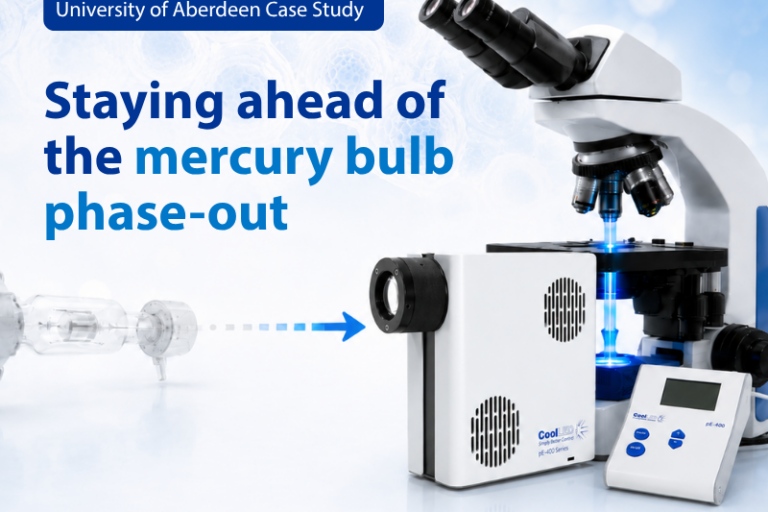
How the University of Aberdeen moved from mercury lamps to LED illumination, and what other microscopy facilities can learn from their journey
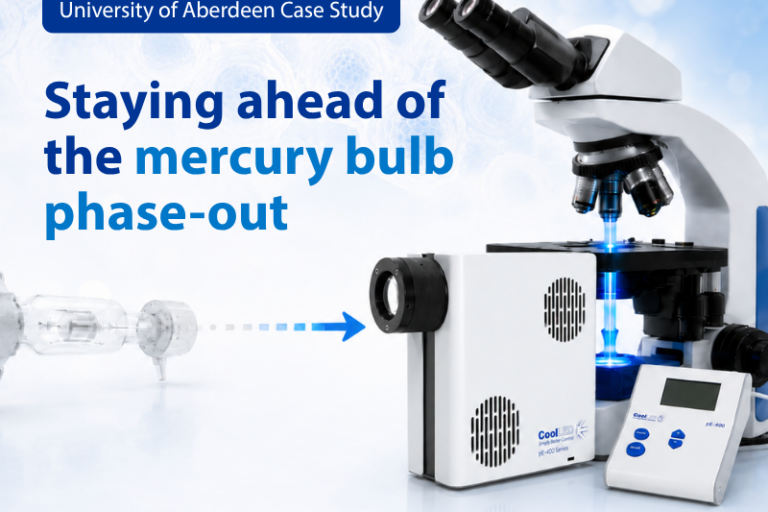
How the University of Aberdeen Microscopy and Histology Core Facility planned ahead, secured funding and transitioned to mercury-free LED illumination

A look at how lab and facility managers can prepare for the mercury and metal halide bulb phase-out using CoolLED’s No More Mercury tools and resources
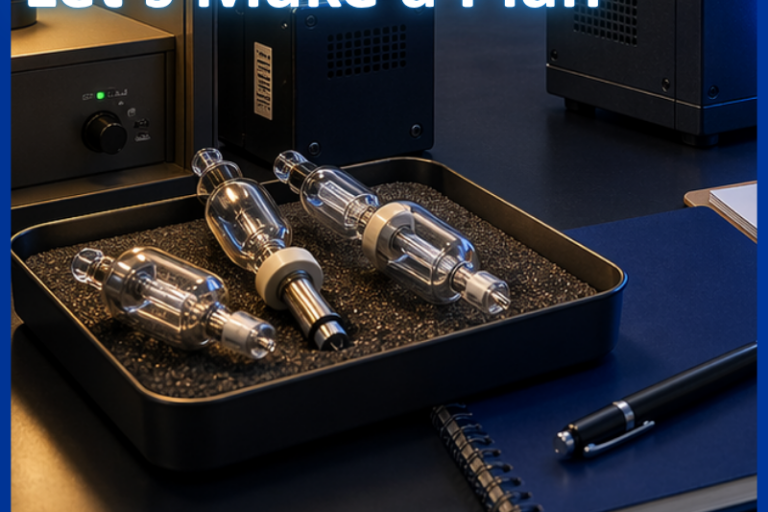
Before your last spare bulb starts being treated like a sacred relic, take a look at what you have, how quickly you use it, and how long it’s realistically likely to last…
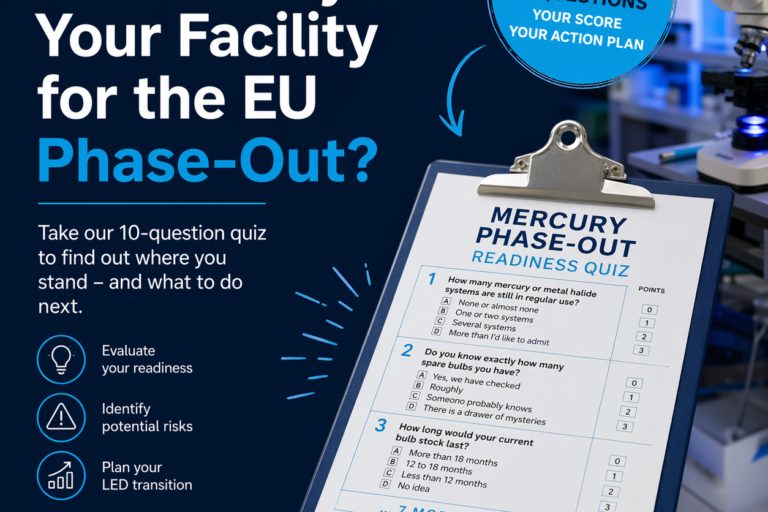
The move from mercury and metal halide to LED illumination doesn’t need to be rushed, stressful or wildly expensive all at once… But it does need to start somewhere

Spring is a good time to refresh your fluorescence microscopy setup and rethink whether outdated illumination is holding your lab back.
Need something a little different?
For manufacturers who wish to gain a competitive advantage through bright, stable and controllable illumination, CoolLED’s world-renowned LED technology is available in customised configurations.

Did you know that LED illumination systems help laboratories reduce their carbon footprint, protecting laboratory staff along the way?
Toxic mercury-based microscope illuminators are bad news for the environment, draw a lot of power and have a short lifetime.
LED illumination systems are cleaner, have a long lifetime and use less power. Our pE-300 Series is also ACT label certified and is a natural choice for labs who want to play their part in helping the environment.
At CoolLED we are committed to giving our customers outstanding service right from the start and throughout the lifetime of the product. Please get in touch if you have any questions or would like a quote. You can also browse our site for technical resources and general support.