At a glance
University of Aberdeen’s route to mercury-free microscopy
Facility
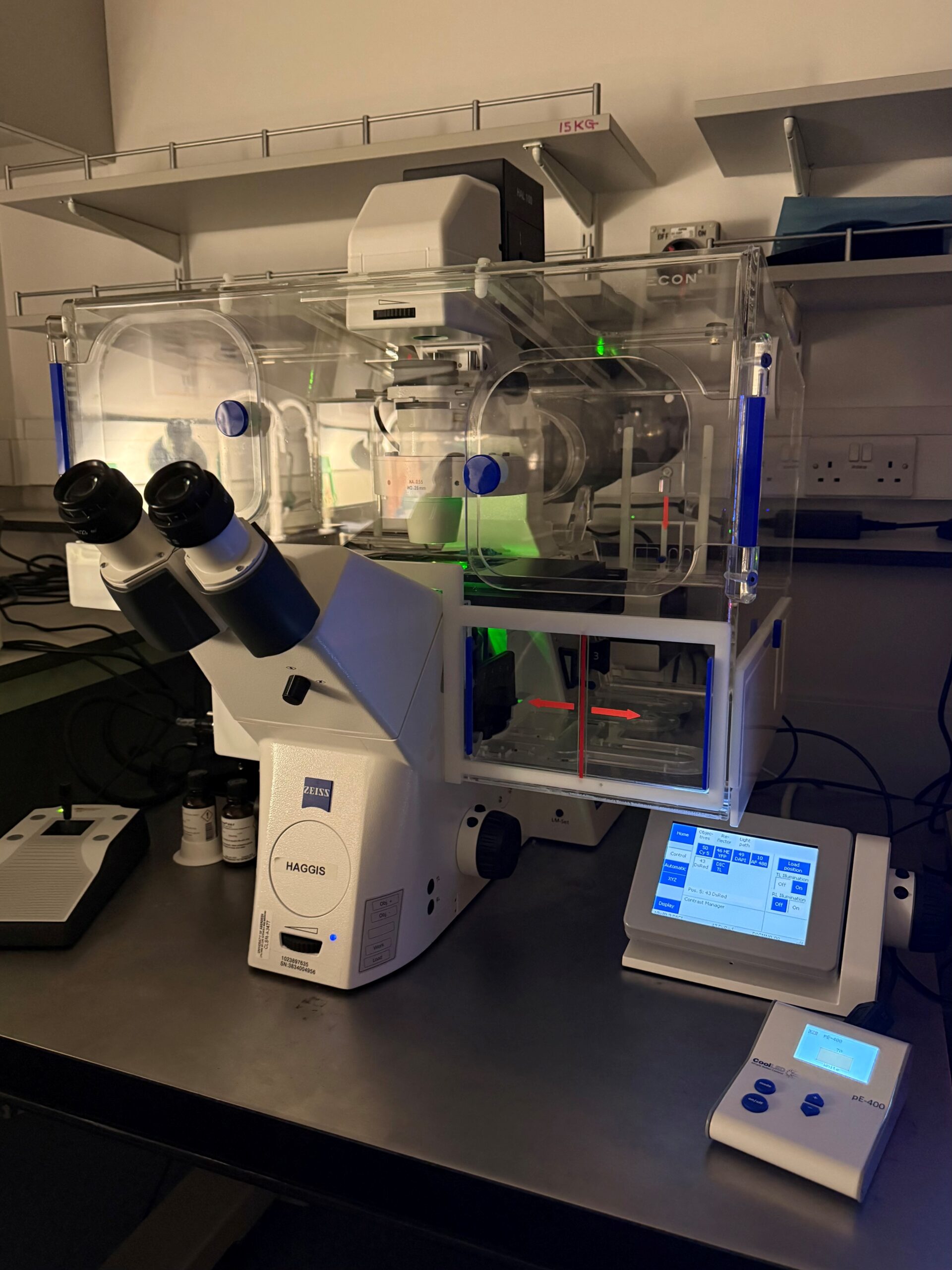
University of Aberdeen Microscopy and Histology Core Facility
Challenge
Preparing older microscope systems for the mercury bulb phase-out
Goal
Move the entire facility to mercury-free fluorescence illumination
Solution
LED illumination upgrades installed across three microscopes
Systems installed
Two CoolLED pE-300lite LED Illumination Systems and one pE-400 LED Illumination System
Outcome
Fully mercury-free illumination, with fewer hazardous consumables and reduced waste
Speaking With Dr Debbie Wilkinson
The challenge
When did the mercury ban first land on your radar, and what was your initial reaction?
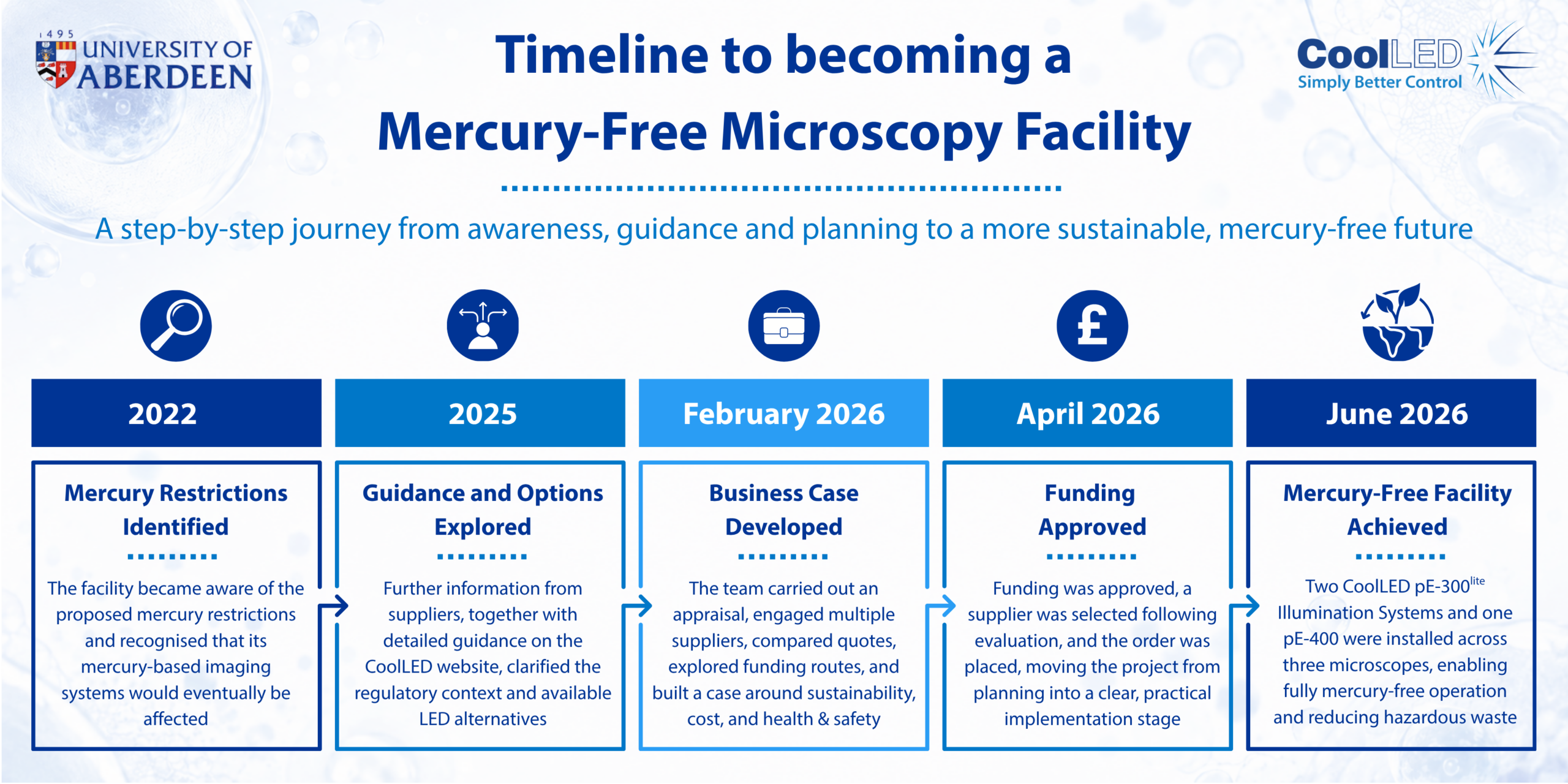
I first heard about the upcoming mercury restrictions around 2022, and my initial reaction was a mix of concern and uncertainty. Stockpiling mercury bulbs was discussed, but it never felt like a sustainable approach. Prices were already increasing, and it was clearly a short-term fix rather than a long-term solution.
Planning the transition
What made it difficult to put a plan in place for becoming mercury-free?
At that point, it was surprisingly difficult to find clear, practical guidance aimed at microscopy facilities. I could find mentions of the ban and general statements about LEDs, but nothing that talked through how a core facility should plan the transition without disrupting users. The issue remained on my radar, but turning concern into a clear plan was challenging.
“Stockpiling mercury bulbs was discussed, but it never felt like a sustainable approach.”
Finding the right information
How did you find the information you needed to move forward, and what steps did you take next?
In 2025, I came across resources on the CoolLED website, which finally pulled everything together and detailed the benefits in terms of cost, health and safety, and sustainability.
Although some of our older systems were already using LEDs, and all recent purchases were LED-based, I was keen to move the entire facility to mercury-free illumination. I raised the issue with the Technical Resource Manager, who also co-chairs the Lab Sustainability Group. A case was made to our School highlighting both the health and safety benefits and the sustainability implications. Our School was very supportive and approved funding for LED upgrades, enabling the transition to a more sustainable long-term solution.
Distributor support
What role did the CoolLED distributor play in making the switch feel manageable?
Scientifica was key in supporting this process. After identifying the microscopes I wanted to upgrade, they helped assess the available options, identify compatible light sources, and highlight where upgrades would be straightforward or require further consideration. The process felt collaborative and well supported.
“Don’t wait for the ban to become an emergency.”
Building the business case
For other facility managers facing the same ban, how would you recommend they justify an LED illumination upgrade?
I would suggest structuring the case around three key areas:
Cost
Consider the total cost of ownership over 5–10 years, including bulbs, engineer visits, downtime and staff time. Acting early also reduces the risk of rising mercury lamp prices and limited availability.
Health & safety
Reducing staff exposure to mercury and simplifying handling and disposal processes are strong arguments. Detail the current risks and administrative burden of managing mercury, and frame LEDs as a proactive risk-reduction step that protects staff and simplifies compliance.
Sustainability
Link the move away from mercury to institutional sustainability targets and initiatives. If you can, estimate reductions in hazardous waste and energy use.
Presented this way, the upgrade becomes a strategic investment that benefits the wider institution, not just the facility.
Advice for other facilities
If you had one piece of advice for facilities that haven’t started planning yet, what would it be?
Don’t wait for the ban to become an emergency. Gather information and explore what options might be available from your institution to support the upgrade to sustainable equipment. Then bring in your distributor early to discuss costs, demos and practicalities. That way, by the time you’re writing a grant or capital request, you’ll have evidence from your own facility and a clear implementation plan.
The earlier you start the conversation, the more options you have. Waiting until mercury lamps become difficult to source only makes the transition harder and more expensive.