Separating the LED Fact from Fiction
LEDs have been around long enough to collect a small museum of myths.
Some are harmless; others waste time and samples. Let’s tidy up the big ones – in plain English!
Myth 1: “LEDs are just on/off torches – fine for brightfield, not for serious fluorescence.”
Modern systems deliver narrow, stable bands with per-channel intensity control and microsecond switching.
In practice that means cleaner timing, less dose outside the camera exposure, and better multi-colour workflows than a mechanical shutter can manage.

Myth 2: “You can’t match oddball dyes without an arc lamp’s broad spectrum.”
You don’t need every wavelength; you need the right ones. With a few well-chosen bands (blue/green/red, plus a near-UV if required) you’ll excite 90% of routinely used fluorophores.
Multi-wavelength platforms let you add or swap channels as your panel evolves.
Myth 3: “LEDs bleach more because you have to turn up the intensity to make up for missing spectrum.”
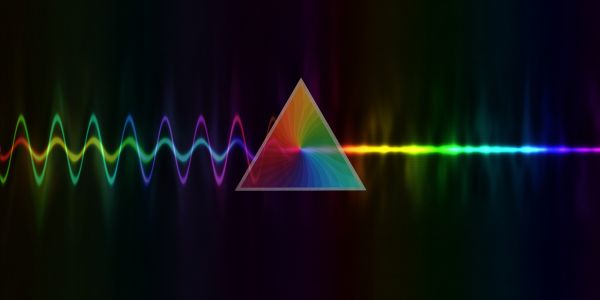
Bleaching is mostly about how long the sample is lit, not the brand of photons. LEDs switch on/off in microseconds, so you can light the sample only during the camera’s exposure and keep it completely dark between frames. Arc/metal-halide setups usually stay on (or rely on slower shutters), so samples see extra “between-frame” light. LEDs also run the optics cooler, which helps keep live tissue stable and reduces drift during long recordings.
The result? Lower dose, longer time-lapses, steadier traces and happier samples

Myth 4: “Colour and brightness drift less with bulbs – LEDs ‘age weirdly’.”
Arcs drift during a single session (warm-up, restrike, voltage wobble) and again as the bulb ages. LEDs are solid-state; the output you get at 9 a.m. is the output you get at 5 p.m., and they’re consistent week-to-week without lamp swaps.

Myth 5: “LEDs aren’t bright enough for serious fluorescence.”
What matters isn’t how dazzling the lamp looks on the bench – it’s how much of the right colour actually reaches your sample. Arc lamps spray lots of colours (a lot of which you often don’t need).
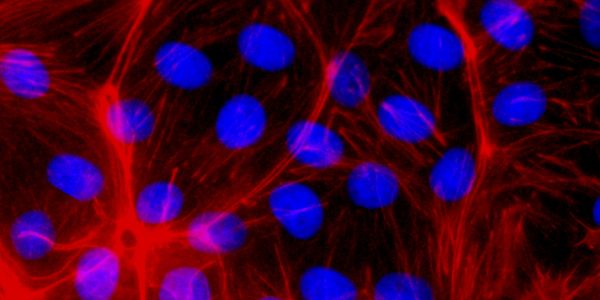
Modern LEDs put a strong dose right where your dye absorbs, and they can fire in short, punchy bursts exactly when the camera is exposing. Result: clear pictures without cooking the sample.
Quick wins you can try today
-
Treat the LED like a silent shutter: wire TTL from camera → light so illumination only appears during exposure.
-
Put channels in a sensible order: dim/bleach-prone first, brightest last.
-
Close the field aperture until it just covers your field – instant contrast.
-
Save illumination “recipes” (wavelength, intensity, exposure) so Tuesday matches Friday.
Where LEDs make life easier
-
Routine screening: instant on, fixed colour, no hot restrikes.
-
Neuroscience: camera-synced pulses for calcium imaging; precise bands for optogenetics.
-
Materials & QC: repeatable spectra for defect detection and documentation.
(If you want examples of compact white sources for everyday work, or multi-band systems for more complex panels, we can point you in the right direction.)
Final thought
Good imaging is about controlling light in space, time and spectrum. LEDs make that control simpler. Ditch the myths, keep the photons honest, and your images, and your methods section, will thank you.
Written by Ben Furness / ben.furness@coolled.com / LinkedIn Profile