A look at why mercury-based illumination still lingers in labs – and why LED light sources are the better, brighter alternative
There are many mysteries in science. Why do pipettes vanish without a trace? Who left the freezer door open? And perhaps most baffling of all: why are mercury lamps still a thing?
In an era where we’ve landed rovers on Mars, built quantum computers, and can order sushi by drone, some labs are still relying on decades-old mercury technology to power their fluorescence microscopy light source. It’s a bit like fuelling a spaceship with coal.
Let’s be clear – mercury lamps were once cutting-edge. They’ve lit up countless samples, supported vital discoveries, and probably been cursed at during late-night imaging sessions. But now a quarter of the way through the 21st century, their drawbacks are getting harder and harder to ignore. They’re hot, hazardous, inconsistent, and have a lifespan that makes mayflies look smug.
The problem with mercury lamps
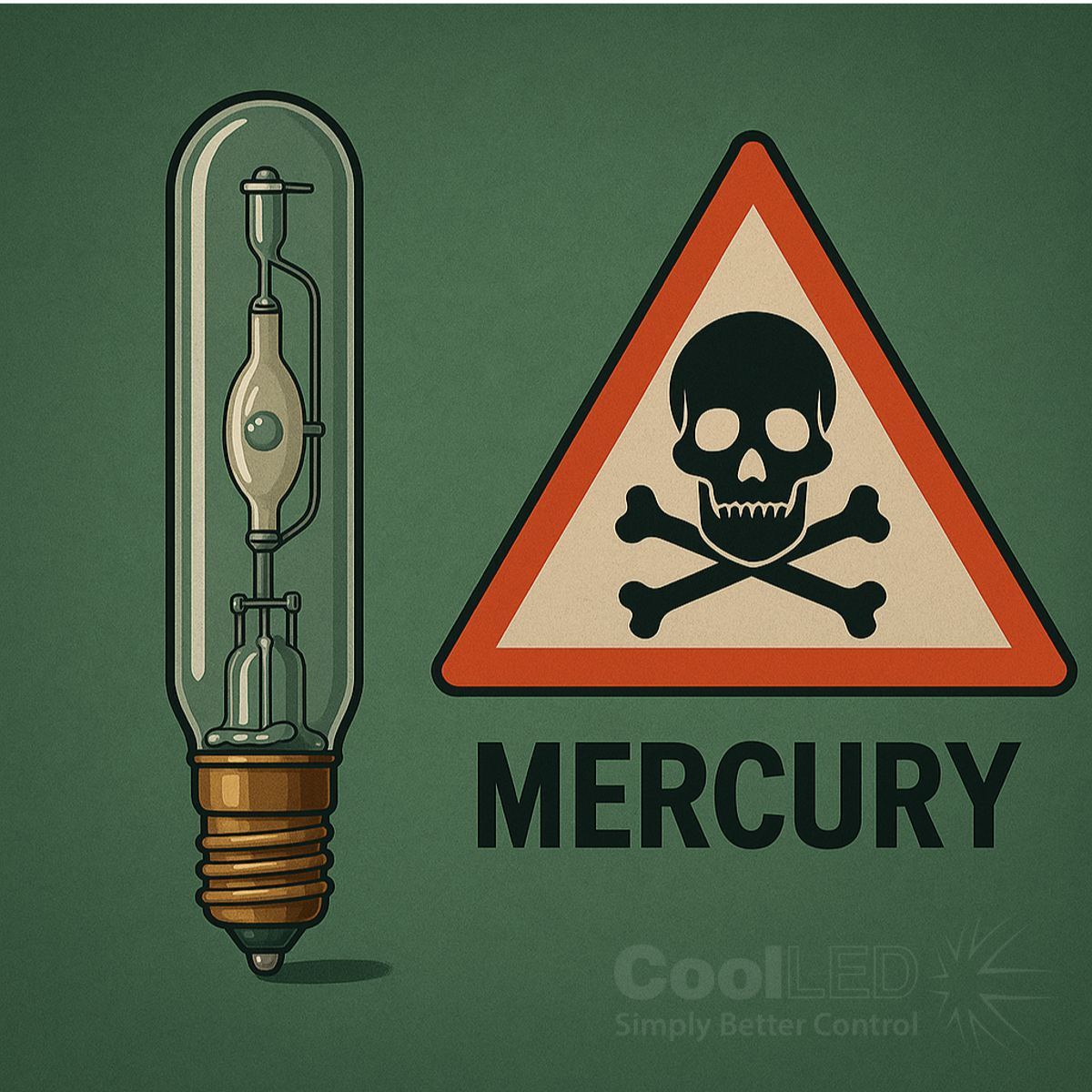
Mercury lamps contain, well… mercury. And while that might sound obvious, it’s worth pausing to appreciate just how inconvenient that really is. Mercury is toxic, difficult to dispose of, and subject to increasing regulation. Accidental breakage requires full lab evacuation and a clean-up kit that resembles something from a sci-fi hazmat drama.
Not only that, but mercury lamps drift in output, warm up slower than your average Monday morning, and tend to expire at the worst possible moment – usually when you’re halfway through imaging a once-in-a-lifetime sample.
So why are mercury lamps still being used?
Inertia. Familiarity. That old microscope in the corner that “still works fine if you jiggle the cable and don’t breathe too hard.” Sometimes it’s budget. Sometimes it’s just that nobody’s got round to it yet. But switching to an LED light source isn’t a luxury anymore – it’s a practical upgrade. One that saves money, improves imaging, and makes your lab safer and more sustainable. On top of that, it’s incredibly easy to make the switch.

Why LED light sources make more sense
Modern LED light sources have quietly revolutionised microscopy illumination. They’re fast to switch on, stable over time, and switch between wavelengths with the sort of speed that makes mercury lamps look like they’re sending semaphore signals.
CoolLED’s range of light sources for fluorescence microscopy are mercury-free, energy-efficient, and last for tens of thousands of hours. That means fewer disruptions, no hazardous waste, and much less shouting at inanimate objects. And because they don’t heat up like traditional lamps, there’s less thermal drift and a lower risk of cooking your sample into fluorescence soup.
Time to make the switch?
If you’re still using a mercury lamp, now’s the time to think about the switch. You’ll save on energy, avoid hazardous waste, and probably extend the lifespan of your microscope (and your patience).
Browse our full range of LED illumination systems or visit our sustainability section to learn more about our drive to rid the world of toxic mercury.
Written by Ben Furness / ben.furness@coolled.com / LinkedIn Profile