
Exclusive Interview with Professor Gail McConnell
This August, the University of Strathclyde in Glasgow hosted the inaugural Strathclyde Optical Microscopy Course (SOMC) 2024.
Leading on from the Plymouth course, it was designed to help early-career researchers, PhD students, and technical professionals get hands-on experience with optical microscopy, from the basics to more advanced applications. The course ran for five days, offering a mix of lectures and practical sessions, with participants even taking a field trip to Loch Lomond to collect specimens for imaging.
The course wasn’t just about learning the tools of the trade though, it was about building a community. Attendees came from a range of research backgrounds, all united by the shared goal of improving their microscopy skills. At CoolLED, we were excited to be part of the experience, lending our technology and expertise to help these budding scientists push their research to new heights.

Meet Professor Gail McConnell
At the heart of the SOMC is Professor Gail McConnell, along with her fellow organisers – Dr Liam Rooney, Dr Brad Amos and Dr Shannon Foylan.
Working out of the Centre for Biophotonics at the University of Strathclyde, Gail is a renowned figure in the world of microscopy. She has made significant contributions to biophotonics, particularly through her work on the Mesolens – an advanced imaging system that allows researchers to capture incredibly detailed images of large biological samples. Her research bridges the gap between physics and biology, and she’s been at the forefront of integrating optical physics with biomedical applications.
Under her leadership, the Centre for Biophotonics has become a hub for innovative research and training, making it the perfect home for a course like SOMC. Professor McConnell’s passion for teaching and collaboration has been pivotal in shaping the course, ensuring that participants not only learn the theory but also get hands-on experience with cutting-edge tools and techniques.
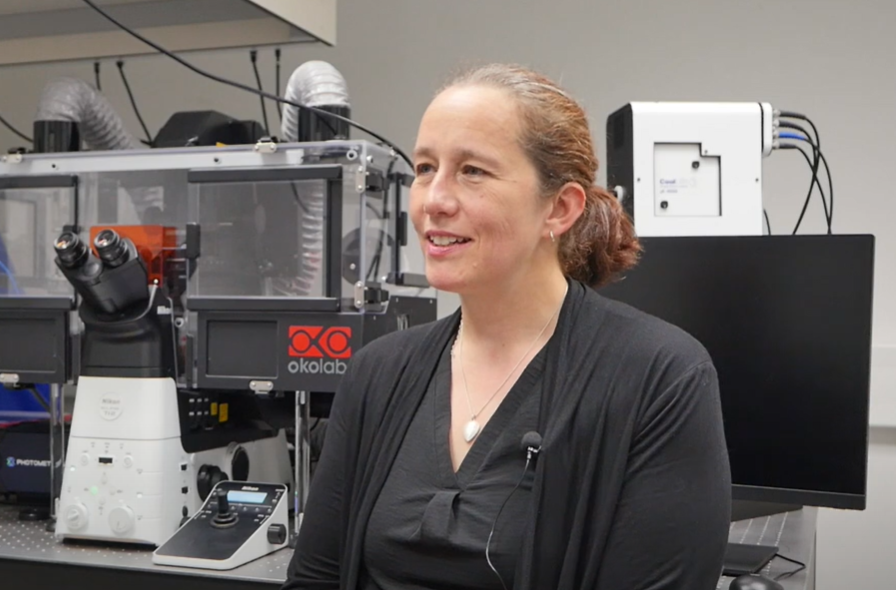
Exclusive Interview
During SOMC, we had the opportunity to sit down with Professor McConnell for an interview to discuss her vision for the course and her thoughts on where the field of fluorescence microscopy is heading. While we won’t spoil the whole conversation here, but it was clear that Professor McConnell is a strong advocate for collaboration between academia and industry. She touched on how these partnerships can drive innovation, ensuring that new technologies, like the ones developed here at CoolLED, are used to their fullest potential.
Check out the full interview below!

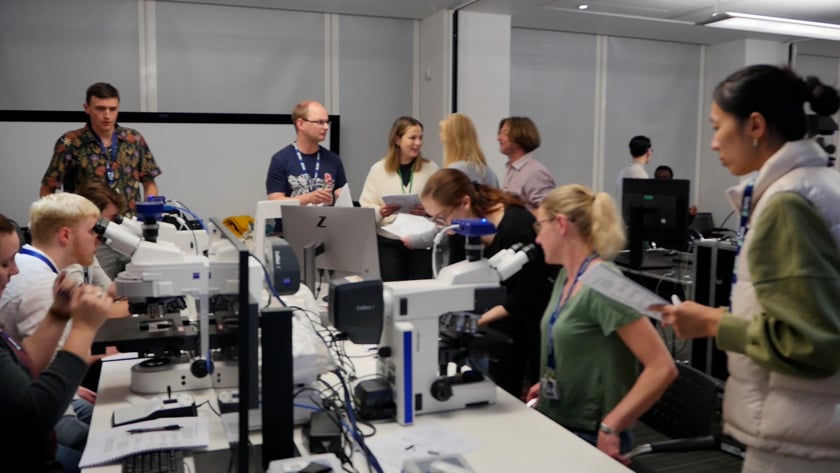
CoolLED’s Role and Commitment to the Future
At SOMC, we had the chance to showcase some of our most versatile and reliable products, including the pE-4000, pE-100, and pE-300ultra fluorescence light sources. These products were used in various hands-on microscopy sessions throughout the course, giving participants a feel for the range of applications they can support in fluorescence imaging. Whether it was the multi-wavelength flexibility of the pE-4000 or the energy-efficient, high-performance capabilities of the pE-100 and pE-300ultra, we were thrilled to see how our technology helped participants get the most out of their imaging work.
For those unfamiliar with us, we specialise in creating LED illumination systems for fluorescence microscopy. Our products are designed with flexibility, sustainability, and performance in mind, offering researchers the tools they need to capture high-quality images without the hassle of traditional light sources. From energy-efficient designs to long-lasting light sources, we aim to simplify the research process while ensuring consistent, reliable results.
Supporting courses like SOMC is part of our broader commitment to academic collaboration. We believe that the best way to drive progress in microscopy is by partnering with the researchers who use our products every day. Whether it’s sharing our latest developments, providing equipment for hands-on learning, or simply exchanging ideas, we’re proud to contribute to the growth and development of this exciting field.