
CoolLED shines a light on neuroscience at CNS China 2026
CoolLED has returned from a fantastic few days at CNS China 2026, where the latest developments in neuroscience brought together researchers, scientists and technology providers from across the field.
Representing CoolLED throughout the conference was Bruce Chen, who spent a busy few days welcoming visitors to the CoolLED booth and discussing how precise LED illumination can support the next generation of neuroscience research.
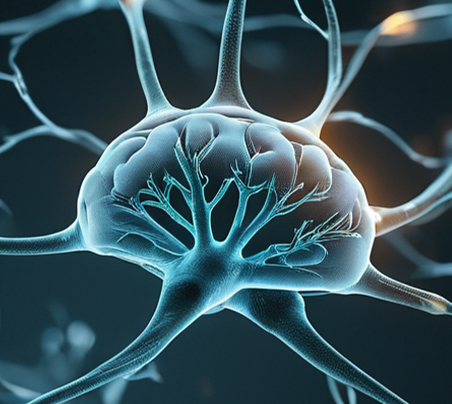

Putting researchers in control of light
Light has become an increasingly important experimental tool within neuroscience. Modern LED Illumination Systems give researchers precise control over wavelength, intensity and timing.
This opens up possibilities ranging from fluorescence imaging of neuronal structures and activity to the optical stimulation of genetically targeted cells.
From fluorescence microscopy and electrophysiology through to optogenetics and increasingly complex stimulation experiments, CNS China gave us the opportunity to hear first-hand where neuroscience research is heading and where better control of light can help.
Meet the pE-300opto
Nowhere was that interest more apparent than around the CoolLED pE-300opto.
Developed specifically for optogenetics, the pE-300opto attracted plenty of attention from visitors looking for a practical and affordable way to introduce precise optical stimulation into their experiments without adding unnecessary complexity.
- Three individually controllable 470 nm, 550 nm and 635 nm LED channels
- Coverage for a wide range of commonly used opsins, including ChR2 and red-shifted tools such as ChrimsonR
- Fast <10 µs TTL triggering for precise stimulation timing
- Liquid Light Guide and fibre delivery options for different experimental setups
- Suitable for optical stimulation alongside fluorescence imaging


Different experiments need different illumination
Every neuroscience experiment is different. The choice of wavelength, opsin, stimulation protocol, microscope, fibre and imaging method all affect what researchers need from their illumination system.
Flexible light delivery means the pE-300opto can fit different approaches. A Liquid Light Guide provides a straightforward option for microscope-based and ex vivo work, while fibre output options support in vivo optogenetics.
The same system can also support fluorescence imaging, giving neuroscience laboratories a flexible platform for experiments combining imaging and optical stimulation.
Plenty to talk about after CNS 2026
What made CNS China particularly useful for the CoolLED team was the chance to speak directly with the people carrying out this research.
Those conversations help us understand what researchers need from their illumination and continue developing technology around the way scientists actually work.
A huge thank you goes to everyone who visited Bruce and CoolLED at CNS China 2026. It was great to see so much interest in LED illumination, optogenetics and the pE-300opto, and to hear about the research taking place across the neuroscience community.
Take control of your illumination
From optogenetic stimulation to fluorescence microscopy and advanced imaging experiments, explore the CoolLED light sources designed to support neuroscience research.
Explore LED illumination for neuroscience