
Introducing the pE-300opto – LED Illumination for Optogenetics
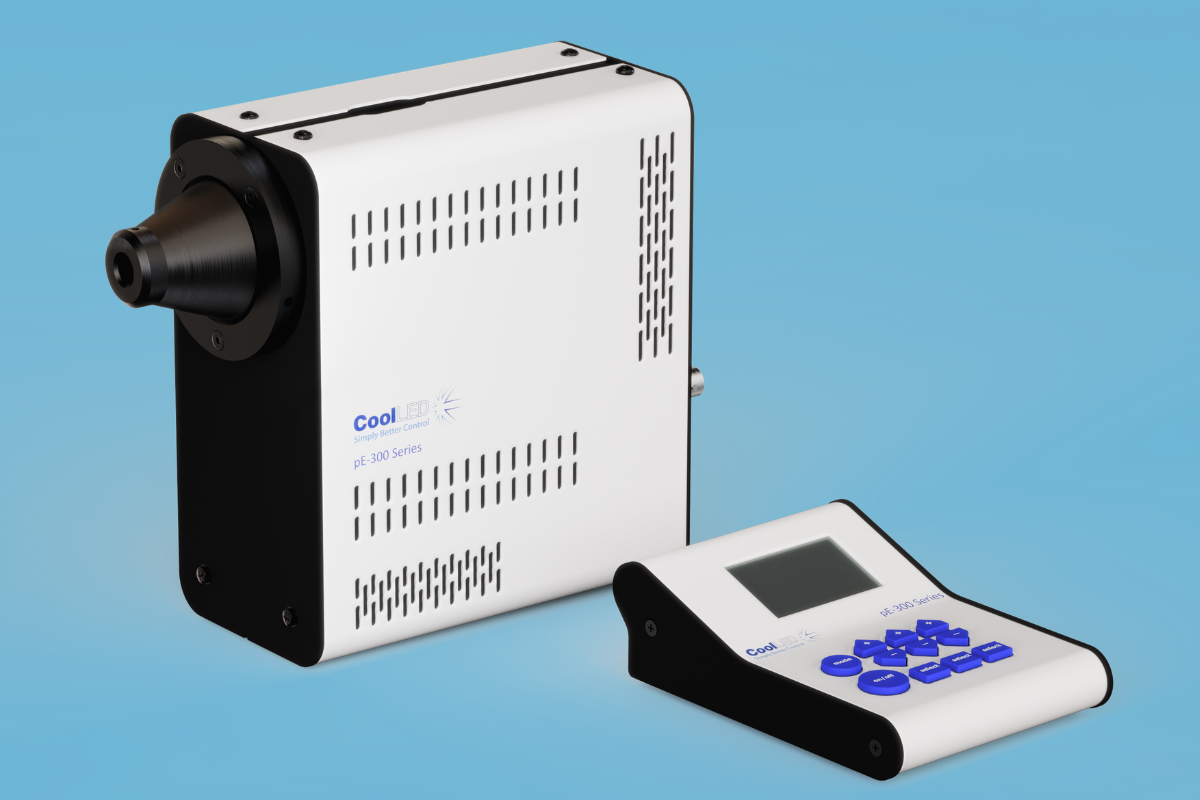
We are proud to announce the new pE-300opto, a light source designed specifically for neuroscience researchers using optogenetics.
The pE-300opto delivers precise, high-speed stimulation for both ex vivo and in vivo experiments, providing compatibility with a wide range of opsins – today and into the future.
Wavelength Coverage
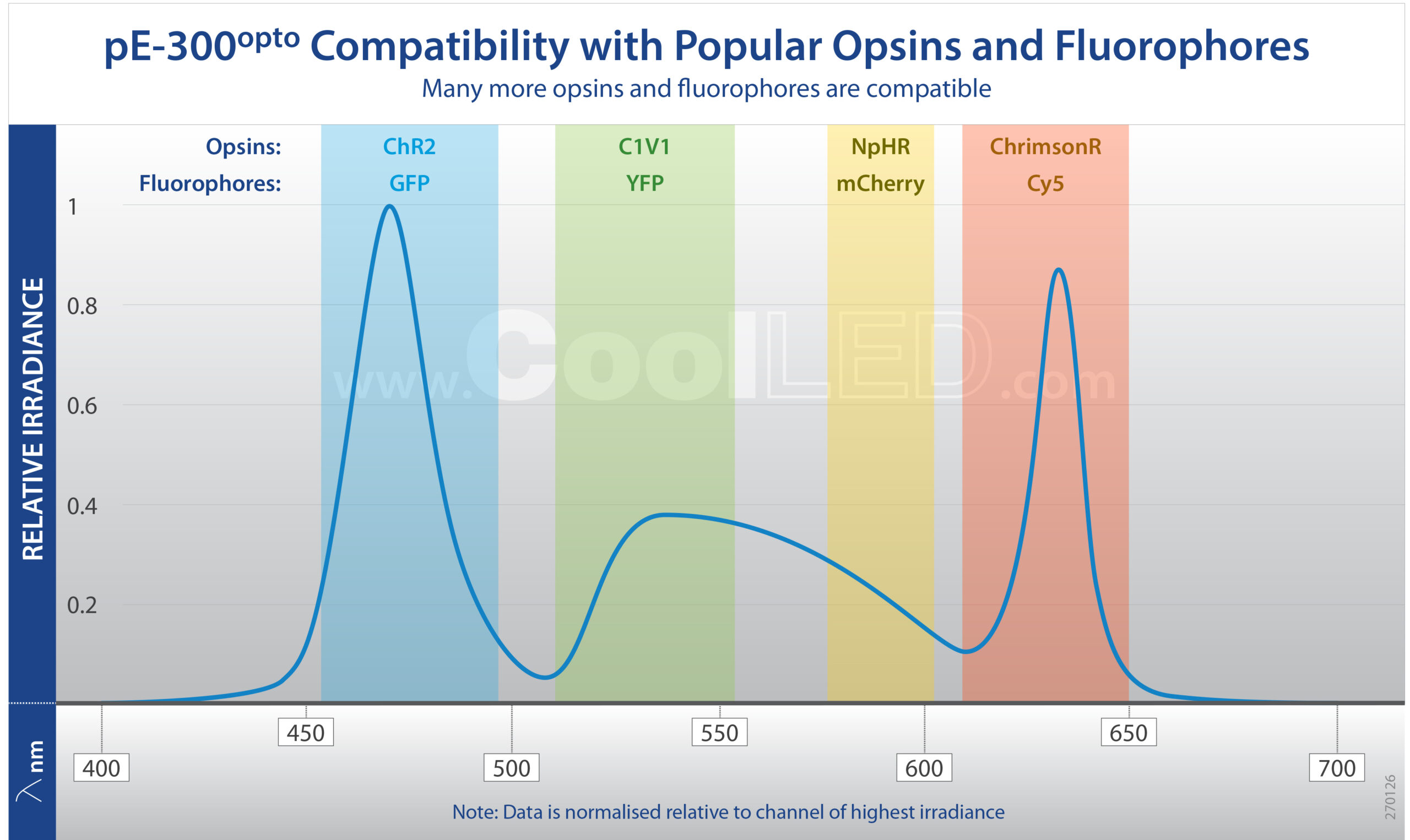
Featuring three individually controllable LEDs (blue at 470 nm, green-yellow at 550 nm, and red at 635 nm), the pE-300opto covers the most popular opsins from ChR2 through to ChrimsonR.
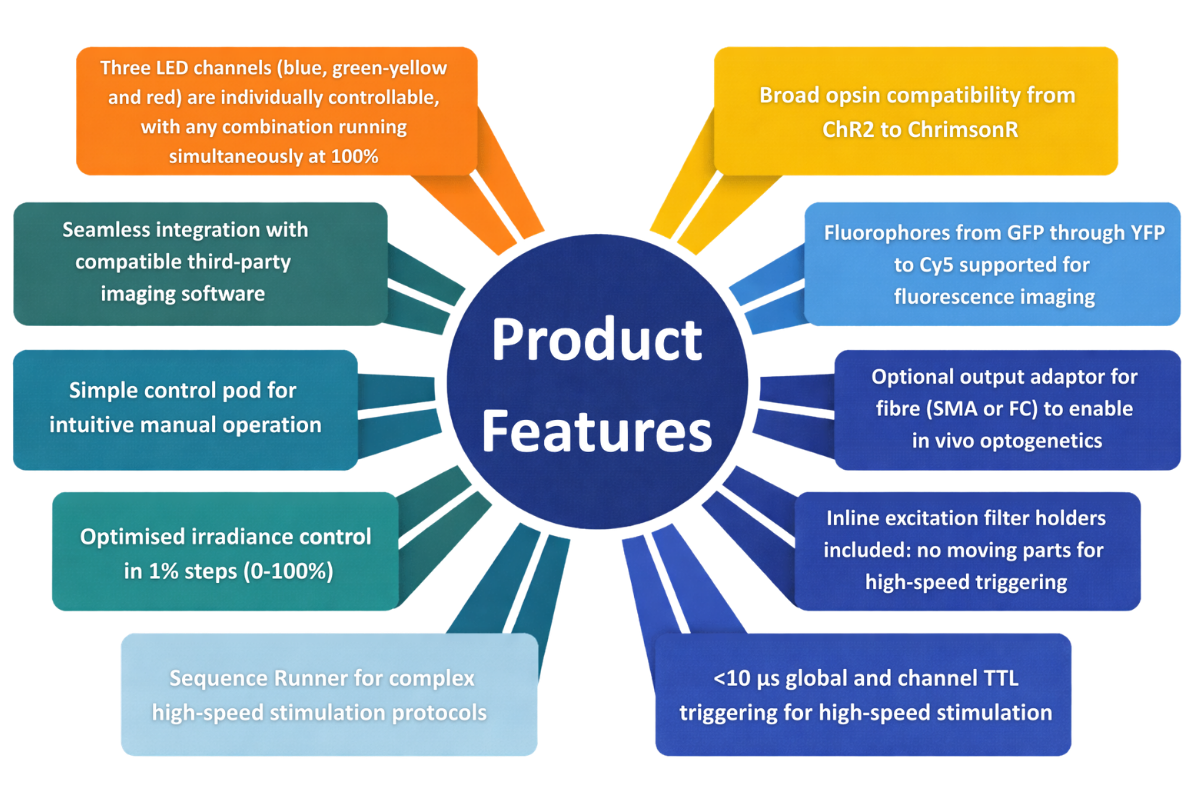
A liquid light guide output comes as standard, ideal for ex vivo optogenetics under the microscope, as well as fluorescence imaging from GFP through YFP to Cy5. For in vivo experiments, an optional adaptor allows quick switching between the liquid light guide and SMA or FC fibres, offering unmatched flexibility.
Features and Benefits
Run fast, dynamic stimulation sequences
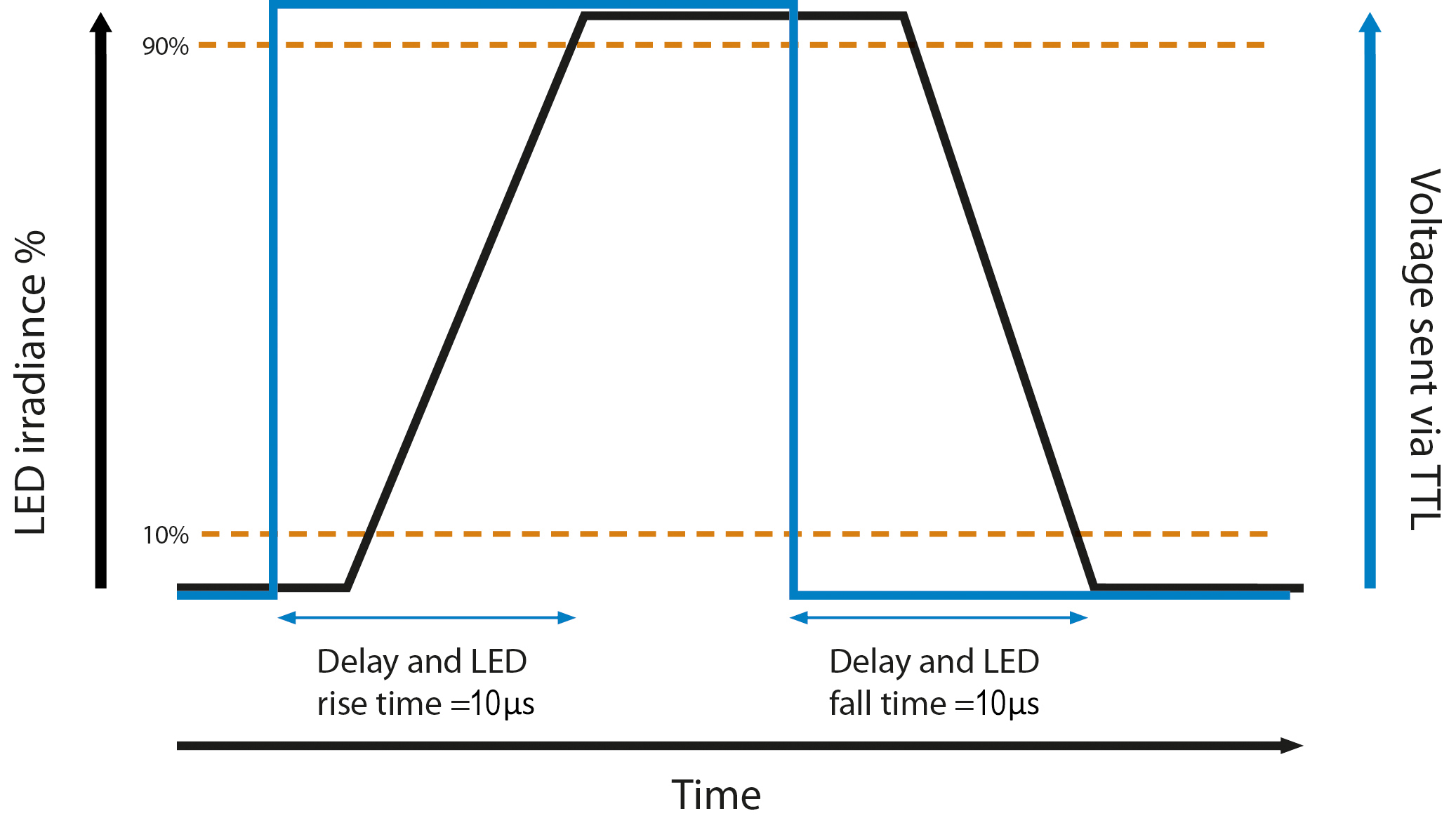
Dynamic, high-speed multi-opsin stimulation is at the heart of the pE-300opto. Each LED can be individually controlled via <10 µs TTL triggering, while inline filters enable clean spectral separation for multi-opsin protocols. The irradiance of each channel can also be modulated to fine-tune stimulation levels when working with multiple opsins.
For simplified high-speed operation, the Sequence Runner program combines the simplicity of manual control and high-speed TTL. Once an LED and irradiance sequence are specified using the manual control pod, the sequence cycles through automatically – with triggering synchronised via the global TTL input of the pE-300opto and a single TTL output from a camera. This makes it easy to implement high-speed stimulation without the need for additional control hardware.
“Optogenetics is a powerful technique in neuroscience research, and the light source is a vital component which must be fast, precise and cover a wide range of opsins,” said Dr Jake Davies, MD at CoolLED. “The pE-300opto builds on our award-winning pE-300 Series technology to provide a light source that can grow with a researcher’s needs, supporting current opsins while remaining future-proof for new developments.”