
The End of an Era: Why Mercury & Metal Halide Lamps Are Being Phased Out
For decades, metal halide and mercury-based lamps have been workhorses in labs and industry. They powered fluorescence microscopy, high-intensity light sources, projectors, and other scientific and technical systems. But that era is drawing to a close and it’s not because these lamps suddenly stopped working. It’s because the world is moving toward safer, more sustainable technology, and the regulations are catching up.
🎯 What’s Actually Changing in 2027?
By 24 February 2027, exemptions that have allowed mercury in metal halide lamps under international hazardous-substances law, like the EU’s RoHS regulations and equivalent UK legislation, will expire. After that date:
-
New mercury/metal halide lamps can no longer be manufactured or placed on the market under those exemptions.
-
Existing lamps won’t suddenly stop working (you can still use what you already have installed), but replacement bulbs will become increasingly rare and difficult to source.
This phase-out isn’t arbitrary. It’s a deliberate move by regulators globally to limit the use of mercury, a hazardous substance that poses environmental and health risks throughout its lifecycle – from manufacturing and transport through to disposal.
🧪 Why Mercury & Metal Halide Are Being Targeted
Mercury has two big issues:
-
Toxicity: Mercury is toxic. Accidental breakages, improper disposal, and handling risks have long been a concern in labs and facilities.
-
Obsolescence of Need: When regulations were first written, many mercury-containing lamps had no viable alternatives for certain specialised applications. Today, that’s no longer true. LED technology has matured to the point where it meets or exceeds the performance of traditional lamps, in most cases with added benefits.

💡 What Comes Next? LEDs Take the Lead
So, if mercury and metal halide lamps are going away, what replaces them? The short answer: LED illumination systems become the long-term standard. Here’s why:
-
No hazardous materials: LEDs contain no mercury, so the regulatory hurdles that apply to discharge lamps simply don’t apply.
-
Stable, repeatable performance: Unlike lamps that drift in intensity over their lifetime, LEDs deliver consistent output over thousands of hours.
-
Instant control: LEDs switch on and off instantly with no warm-up, no warm-cool fluctuations, and without the need for frequent bulb changes.
-
Better sustainability: Lower power usage, cooler operation, and significantly longer useful life all help reduce energy consumption and waste.
Even in highly specialised scientific applications, LEDs have become mature and trusted. They’re not just an eco-friendly option, they’re a practical, high-performance choice that keeps workflows consistent while future-proofing your lab or facility.
⚙️ What This Means for You
If your systems still rely on mercury or metal halide bulbs:
-
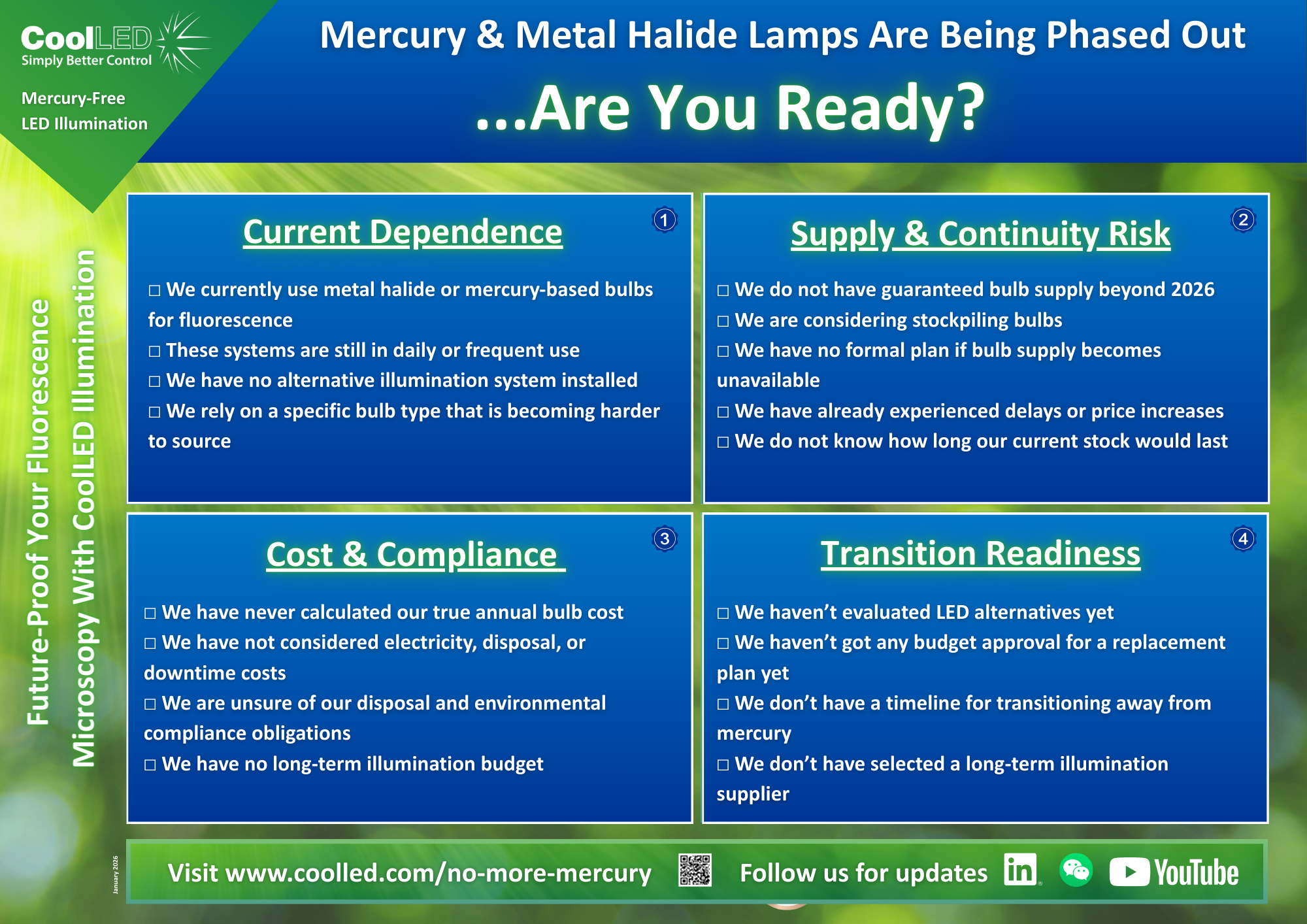
You don’t need to panic. Your current lamps will continue to work, but preparation is now key in terms of what you do after February 2027.
-
Sourcing new lamps and spares will get harder and more expensive.
-
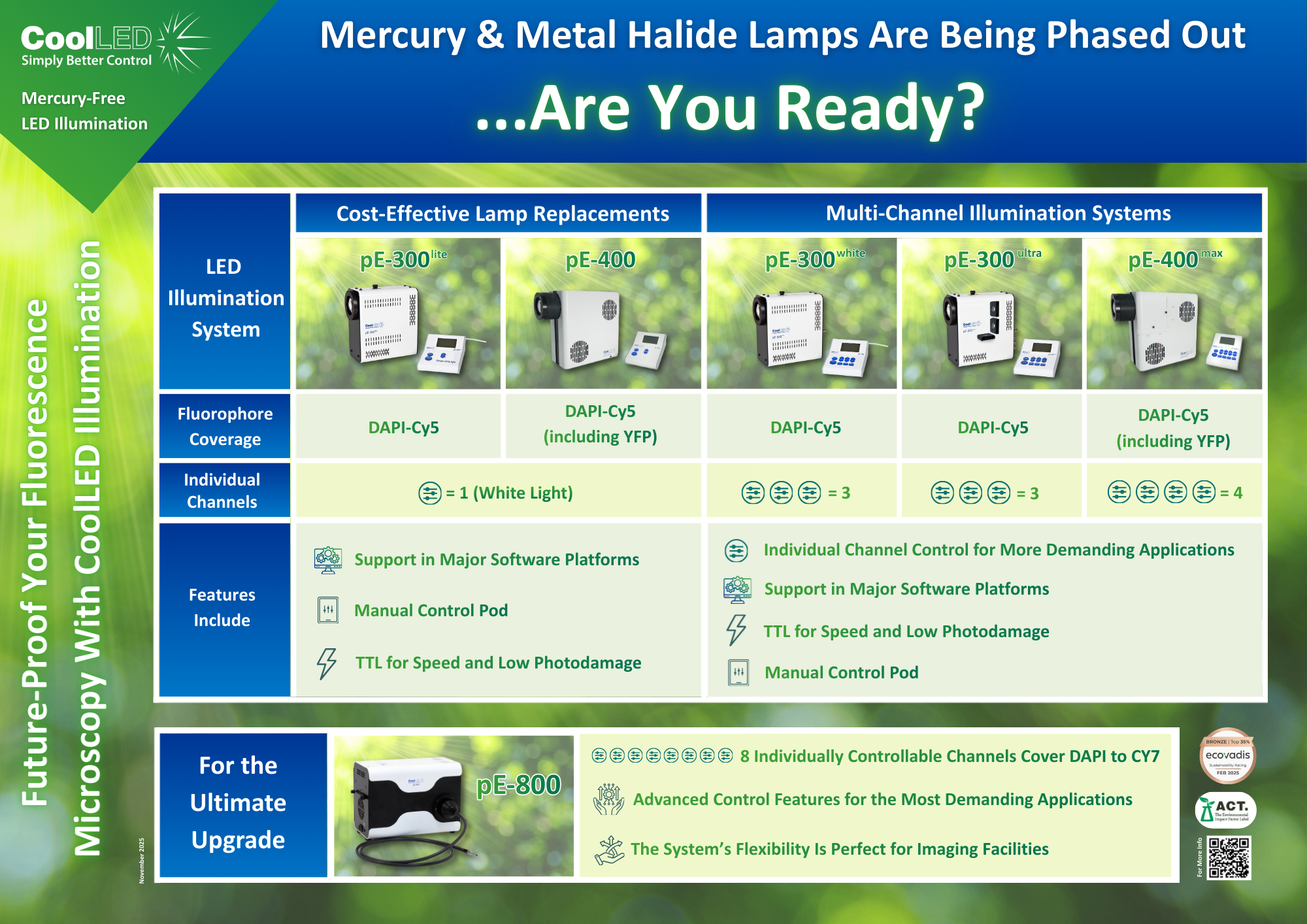
It’s a good time to review your long-term lighting strategy and consider when and how you’ll transition to mercury-free illumination. Our LED Illumination Systems offer a sensible, compliant, and future-ready path forward.
Written by Ben Furness / [email protected] / LinkedIn Profile