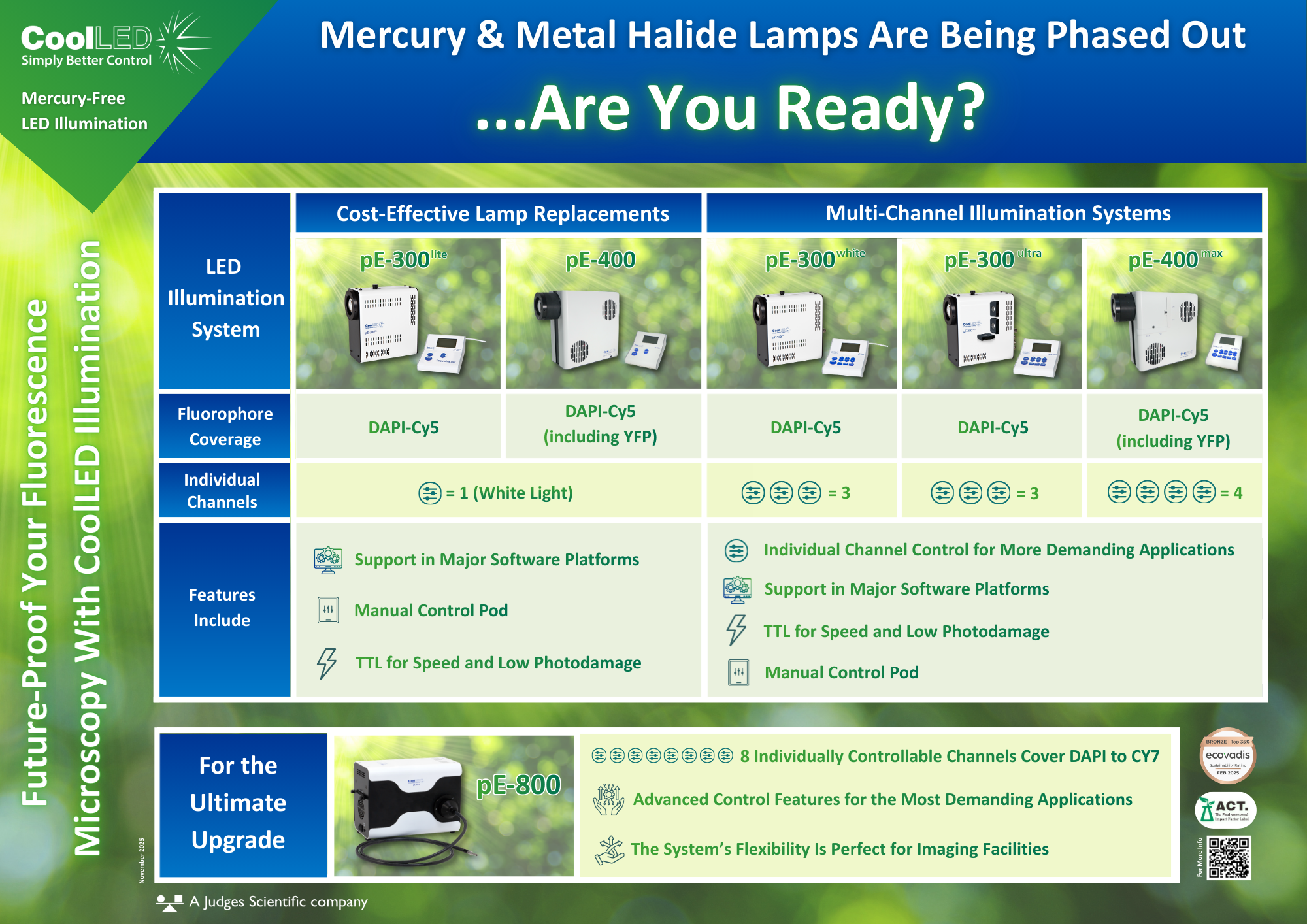
Time to Start the Conversation
The global phase-out of mercury and metal halide lamps used in fluorescence microscopy is approaching, with the current timeline pointing towards February 2027.
For some labs, that information may already be familiar. For others, it might be the first time they’ve heard about it.
And in truth, most facilities fall somewhere in between.
Some people have seen the news but haven’t had a chance to think about what it might mean for their microscopes. Others are aware that mercury-containing lamps will eventually disappear but haven’t yet looked closely at timelines or supply risks. A few labs have already started planning how and when they’ll transition to alternative illumination technologies.
All of these positions are completely normal.
Different labs are at different stages
In our conversations with researchers, imaging specialists and lab managers, we’re seeing a wide range of reactions.
Some people are simply curious. They want to understand what the regulation actually says and whether it affects the microscopes they currently rely on.
Others are thinking a bit further ahead. They’re starting to ask practical questions about how long their existing lamp stock might last, or how easy it would be to replace mercury or metal halide illumination if supply becomes limited.
Then there are labs that are already exploring the transition in more detail, looking at how modern LED illumination systems might fit into their workflows. There’s no single “correct” point to be at in that process.
The important thing is simply knowing the information is there when you need it.
A lot of further information, as well as downloadable resource packs and planning tools, can be found on our ‘No More Mercury’ webpage.
You can also find details about how to contact us, depending on what stage of the transition your facility is at.
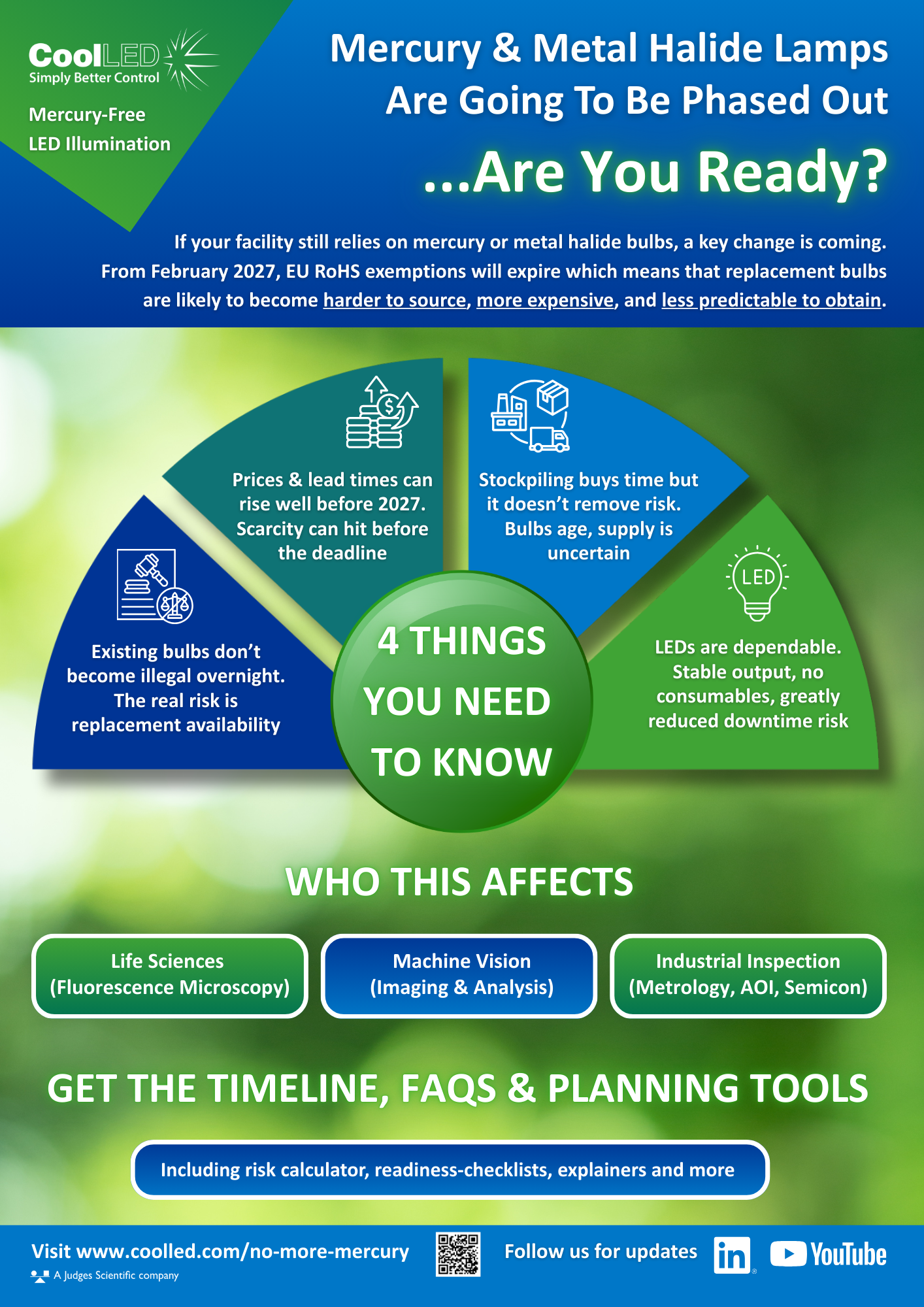
Starting the conversation early makes things easier
One of the advantages of knowing about the phase-out ahead of time is that it gives labs space to think about their options calmly.
For many facilities, the transition away from mercury lamps won’t be something that happens overnight. It may happen gradually as microscopes are upgraded, systems are refurbished, or new equipment is introduced.
Understanding what the change means for your specific setup can make those decisions feel much more straightforward.
Sometimes it’s just a quick discussion about compatibility. Sometimes it’s a longer conversation about workflow, imaging requirements or future planning.
Either way, having that conversation earlier tends to make things much easier.
If you have questions, we’re always happy to talk
At CoolLED, we’ve been working with fluorescence illumination systems for a long time, and the upcoming transition away from mercury lamps is something we spend a lot of time discussing with labs around the world.
Some people contact us because they’ve just heard about the phase-out and want to understand what it means. Others are already exploring LED solutions and want advice on how they might integrate into their existing microscopes.
Whatever stage you’re at, we’re always happy to chat. No pressure. No assumptions. Just helpful information and a chance to explore what might make sense for your setup.
If you’d like to learn more, or simply want to talk through your current system, feel free to get in touch with the team.