
Designing a Custom Fluorescence LED Illumination System
Automation is a widespread trend, maximising throughput and efficiency in areas across life science research, drug development and clinical testing – as well as in the world of industrial inspection. As the market for automated fluorescence becomes increasingly competitive, system developers require a competitive advantage to differentiate their instruments and support their customers in their ever-more demanding applications.
However, embarking on designing and manufacturing a new automated imaging system for fluorescence microscopy is a challenge that can quickly become an expensive and complex project. For many of the components integral to the microscope, it is simply not feasible to manufacture these in-house. In contrast, the function of the light source can seem relatively simple: provide a focused beam of light at a specified wavelength.
Find Out
- Why high-performance LED Illumination is complex
- How LED illumination can be customised
- Key considerations for integrating LEDs imaging systems
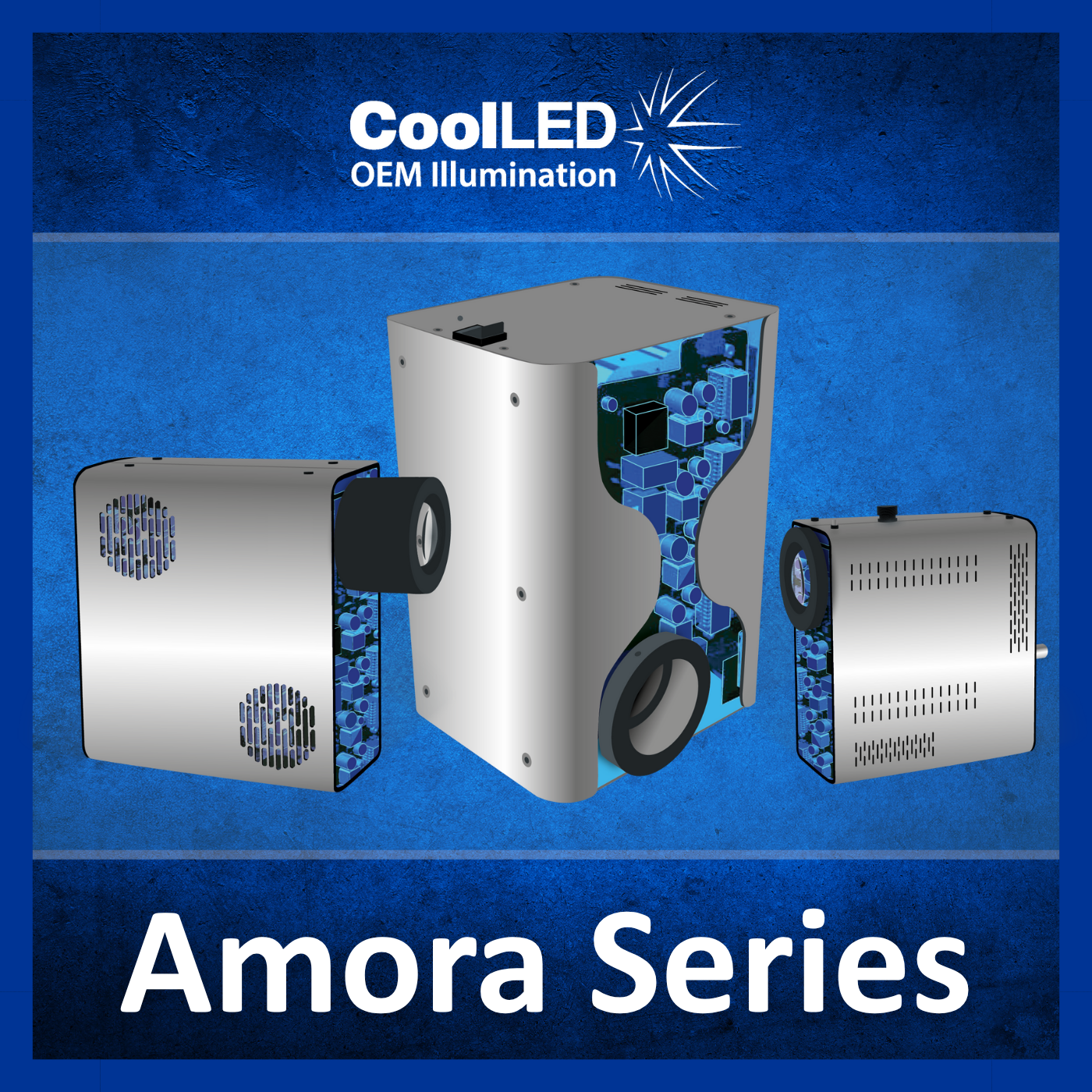
Key considerations for a customised fluorescence light source
It might seem entirely possible to minimise build costs and bring the design and manufacture of this component in-house – but there are many considerations required for a high-performance customised fluorescence light source.
No two imaging systems have the same requirements, and considering the following topics will help maximise the performance of the light source, and therefore the complete instrument.
Which light source?
While some imaging methods rely on lasers, widefield fluorescence microscopy is fast and affordable which is ideal for automated setups. LEDs have become the technology of choice for widefield fluorescence, rapidly growing in popularity as manufacturers modernise their instruments.
Compared to mercury and metal halide lamps traditionally used for widefield fluorescence, LEDs offer many advantages for automated systems. Their long lifetimes maximise instrument up-time (gone are the days of replacing and re-aligning bulbs). A stable output over time also provides comparable data between experiments performed months or years apart. And thanks to their solid-state nature, the speed of electronic control translates to increased sample throughput. These are only a few key advantages, in addition to aspects such as superior energy efficiency and sustainability, user-friendly operation and low-cost maintenance.
Spectral characteristics
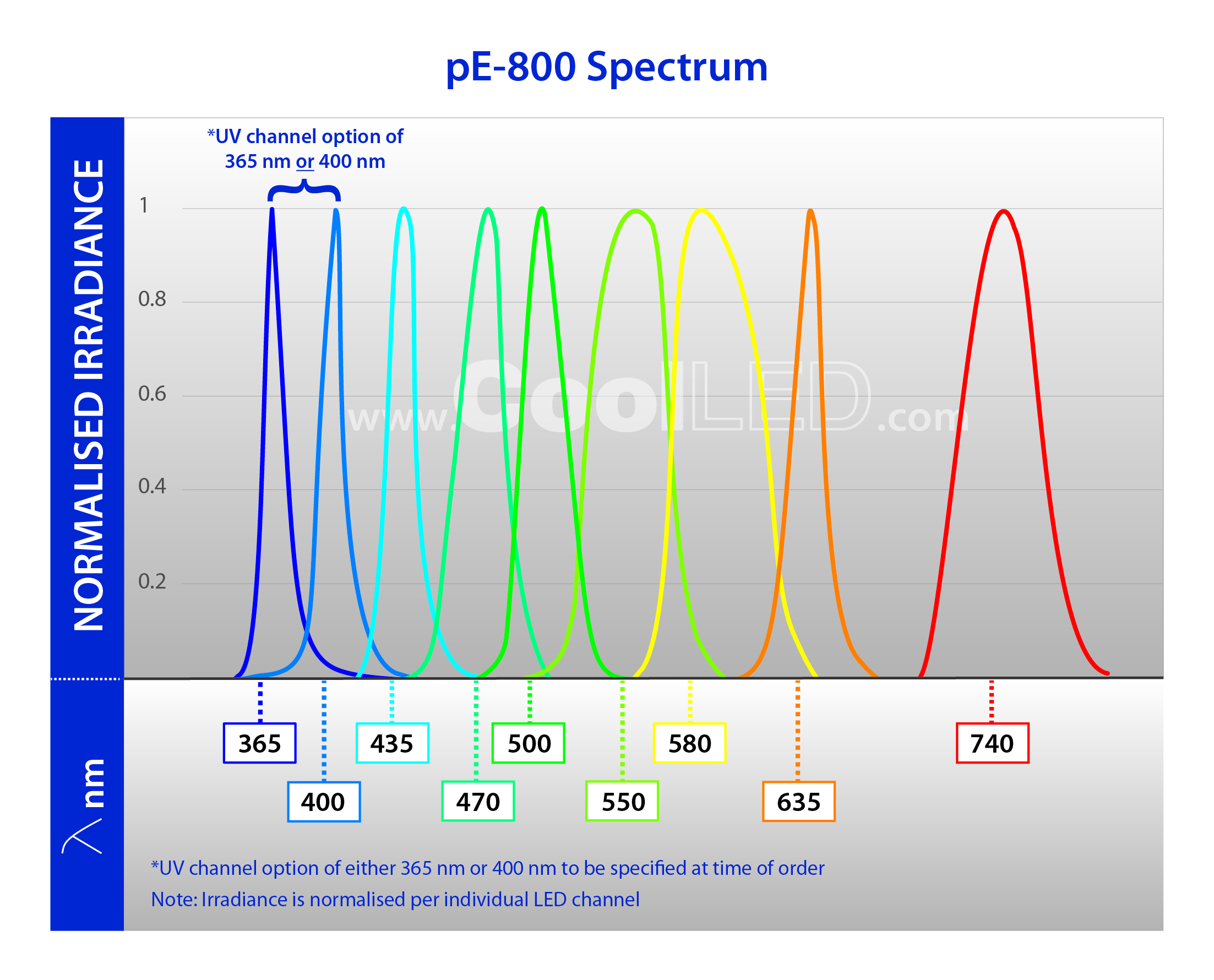
Once LED technology has been chosen for a project, the next decision to make is which LED, or LEDs. In order to excite the fluorophore set required by the end user’s application, many LEDs are available across the standard spectrum utilised in life science microscopy. For example, the CoolLED Amora Series ranges from 340 nm for Fura-2 calcium imaging up to 850 nm in the near-infrared. Outside of these specialist applications, the most popular LEDs range from DAPI (peak excitation of 365 nm) to Cy7 (peak excitation of 740 nm) (Figure 1).
Whilst a light source can house many individual LEDs, the level of their control can vary. The simplest option is to control all LEDs globally (on one channel), which is ideal to minimise costs for single-colour imaging applications, or where minimal cost is prioritised above image quality.

Alternatively, each LED can be controlled individually, with such multi-channel LED light sources better suited to multi-colour imaging. Multi-colour imaging has many diverse applications and is especially valuable in the latest spatial biology applications. When using only the relevant LED channels, spectral bleed-through is minimised and the signal-to-noise ratio is improved, as optical filters are exposed to less unwanted light from other spectral regions – reducing the burden on their blocking ability.
The ability to switch between channels also increases the speed of acquiring high quality images when used with a multi-band or Pinkel optical filter configuration (Figure 2).
To maximise image quality (including spectral separation in the case of multi-colour imaging), we recommend paying close attention to exactly which fluorophores will be required, their absorption spectra compared to the LED spectra, and compatible filter sets.
Not all LEDs have the same spectral width, and even if the peak of an LED does not match the peak absorption of a fluorophore exactly, it may still be compatible.
Control & Connectivity
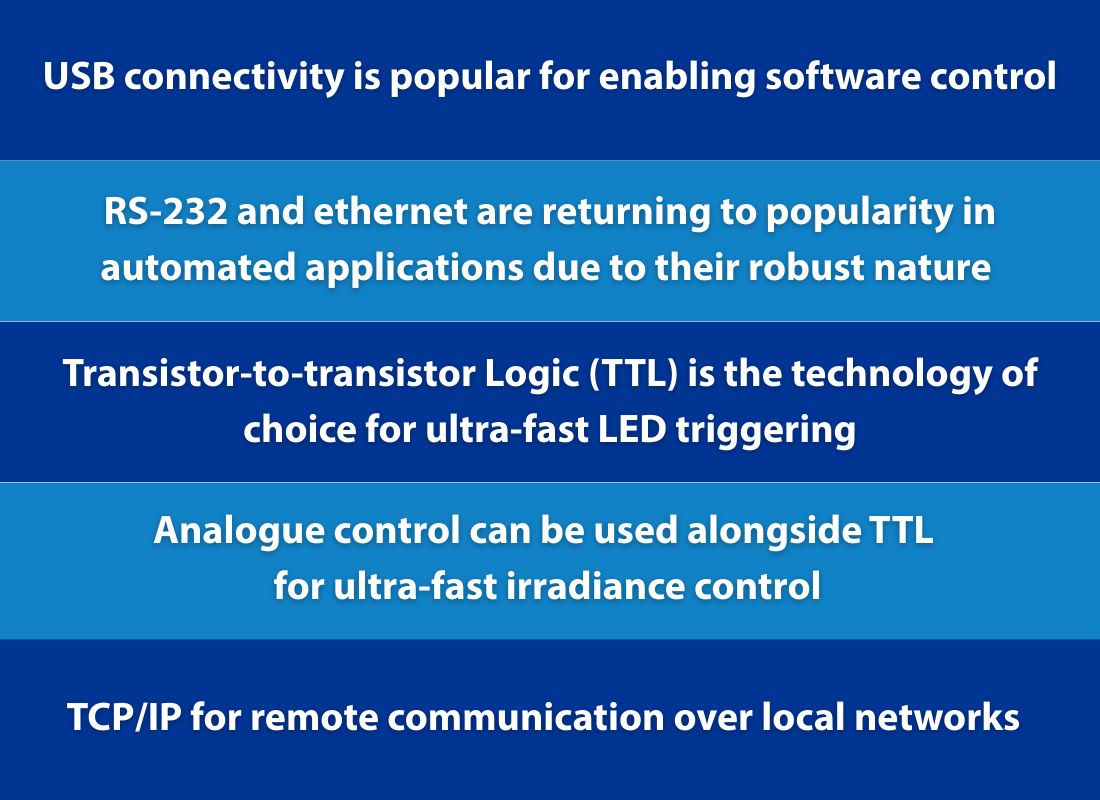
LED illumination is renowned for the range of electronic control options possible, which enhances the performance, flexibility, and reliability of automated imaging systems.
For example, the light source can be synchronised with other components in the light path, such as the camera, and these settings can be saved and repeated for precise and reproducible automated imaging with minimal operator input.
Electronic control is also fast compared to traditional mechanical shutters. Each channel (or all channels simultaneously in the case of global control) can be switched on or off with near-instant speed. Fast imaging doesn’t just increase the speed of sample throughput, but can capture dynamic samples in greater detail, in the case of live cell imaging applications (Figure 2).
To fine-tune brightness, either between samples, or even individual fluorophores within the same image, percentage irradiance modulation is possible individually or globally. However, the electronic engineering involved can be highly complex to ensure linearity, especially at the lower ranges used for sensitive samples.
Light Delivery
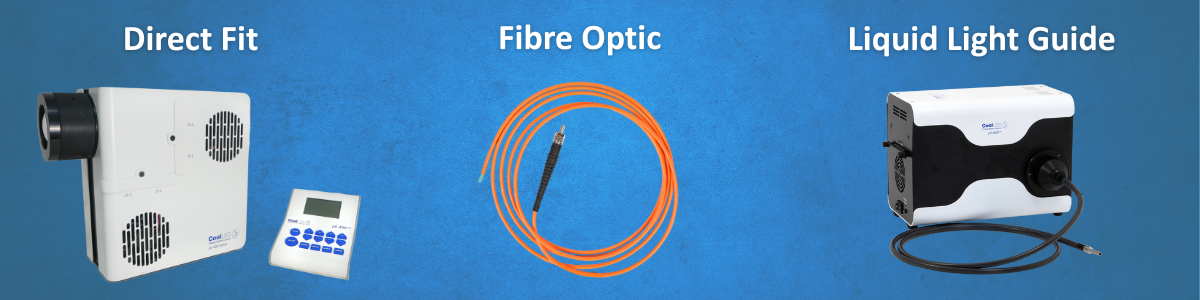
A few different options are possible for interfacing the light source to the imaging system, whilst optimising both the mechanical coupling and optical configuration. To maximise irradiance at the sample plane, direct coupling is sometimes possible depending on the spatial constraints within the instrument, and the optics must be carefully designed to ensure optical homogeneity.
A liquid light guide connection provides flexibility in terms of placement within (or outside) the instrument housing, but the drawbacks are two-fold: reduced irradiance at the same plane compared to direct coupling, and the need to periodically replace the liquid light guide due to UV damage over time.
Optical fibres are ideal for focusing the beam of light and maximising irradiance in a pinpoint area, but they reduce irradiance and also need to be replaced periodically.
Extra considerations and pitfalls to avoid
Optical design
The light hitting the sample plane must have sufficiently high irradiance to excite the required fluorophores, and the homogeneity to ensure precise sample analysis across the field of view. Homogeneity is especially important for image stitching applications, to avoid vignetting and ensure smooth transition between individual tiles.
There are trade-offs to be made between irradiance and homogeneity, and the property of etendue is crucial to understanding this. Defining the angle and spread of light emitted from the LED, etendue therefore defines how much power can be collected by the optical system, focused efficiently and transmitted to the sample plane.
Another consideration of optical design is that the coating of optical filters is angle-dependent and compatible with light beams up to around 10 degrees. Collimation of the light source is vital for correct optical filter compatibility.
Size & Thermal constraints
Automated imaging systems, especially in biomedical applications, work their components hard. Samples can be running around the clock with many millions of images acquired per year.
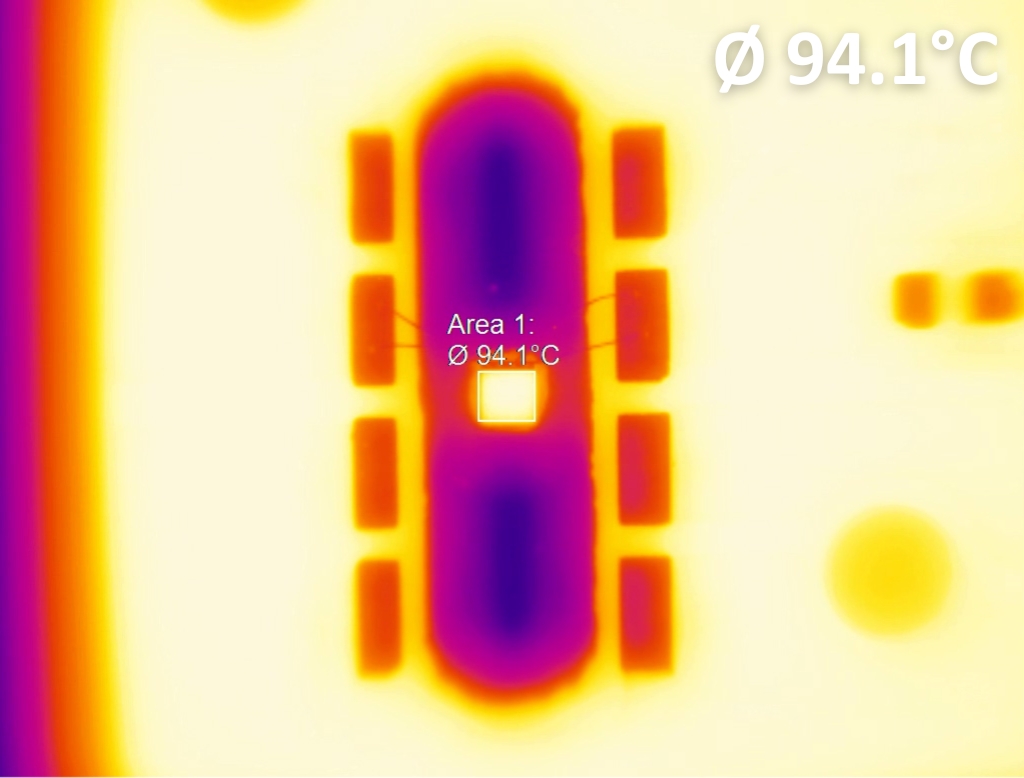
Driving LEDs hard generates more power – but it also generates heat (Figure 3). Unlike a bulb that radiates most of its heat, the heat from an LED must be conducted away from the source. Unless properly managed, this will severely limit the LED’s stability and lifetime. Thermal management is therefore a key part of any LED light source design, and a highly demanding area of expertise. A combination of large heatsinks, space and fan cooling systems are essential.
Of course, these thermal management solutions have a knock-on effect on the size of the light source, which is a consideration when fitting inside an automated imaging instrument. Together with the number of LEDs (and therefore optical path lengths) which also impacts size, these constraints should be considered early in the project.
Purchasing LEDs
Catalogues offer countless, and increasingly powerful, LEDs to choose from. One extra aspect to consider is that each production round of LED manufacture results in performance deviations, including wavelength and light output. Purchasing low quantities of LED chips directly from a component reseller means a ‘lucky dip’ with LEDs from different bins – for example, we have experienced wavelength variance of up to 25 nm.
Since designing and manufacturing LED light sources is our specialism at CoolLED, we are able to reduce this spread to under 5 nm by buying in bulk directly from the manufacturer at bare LED die level, and then performing internal testing.
Component integration
The light source doesn’t function independently, but is instead dependent on other optical components such as the camera and filters. It can be a challenge to find compatible components supplied from organisations who will collaborate with both the project team and each other in order to deliver a successful custom imaging system.
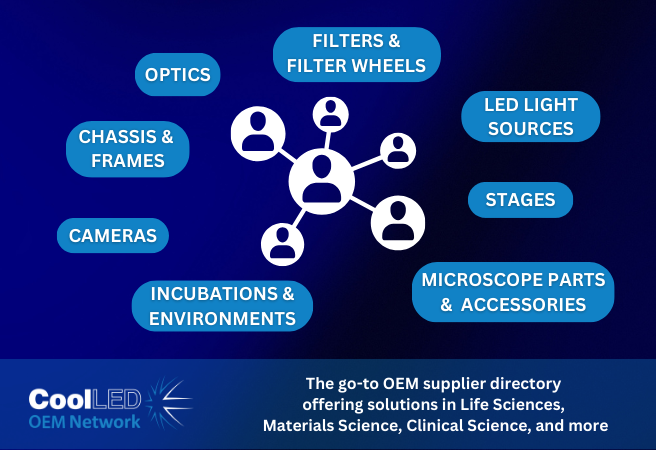
The CoolLED OEM Network has simplified this process by connecting manufacturers with a range of trusted partners in a one-stop directory, making it easier to source the right components for a successful solution.
Summary
Instrument manufacturers must keep pace with the latest technology trends in all areas of imaging technology. However, fluorescence microscopy illumination is far from simple – and the complexity of developing an optimised LED light source underscores the importance of determining detailed requirements early in the project.
With numerous considerations to address – from spectral compatibility and optical design to thermal management and control – careful planning from the outset is essential to navigating the challenges and delivering a robust, high-performance system in an increasingly competitive market.
Access the latest LED illumination technology to give your instrument the edge
Partner with our team of LED illumination experts to reduce the complexity and risk from your project. Benefiting from our Amora Series technology – a proven off-the-shelf product range adapted to offer unparalleled customisation opportunities – you’ll gain rapid access to the latest LED technology for fluorescence imaging.
Our collaborative approach provides you with a fast, low-risk solution, allowing you to focus on other areas of your project.

Based on the article:
Goodhand, I. (2025, January). Fluorescence LED illumination systems can be customized for life sciences applications. Photonics Spectra. Available at: www.photonics.com/Articles/Fluorescence_LED_Illumination_Systems_Can_Be/a70445