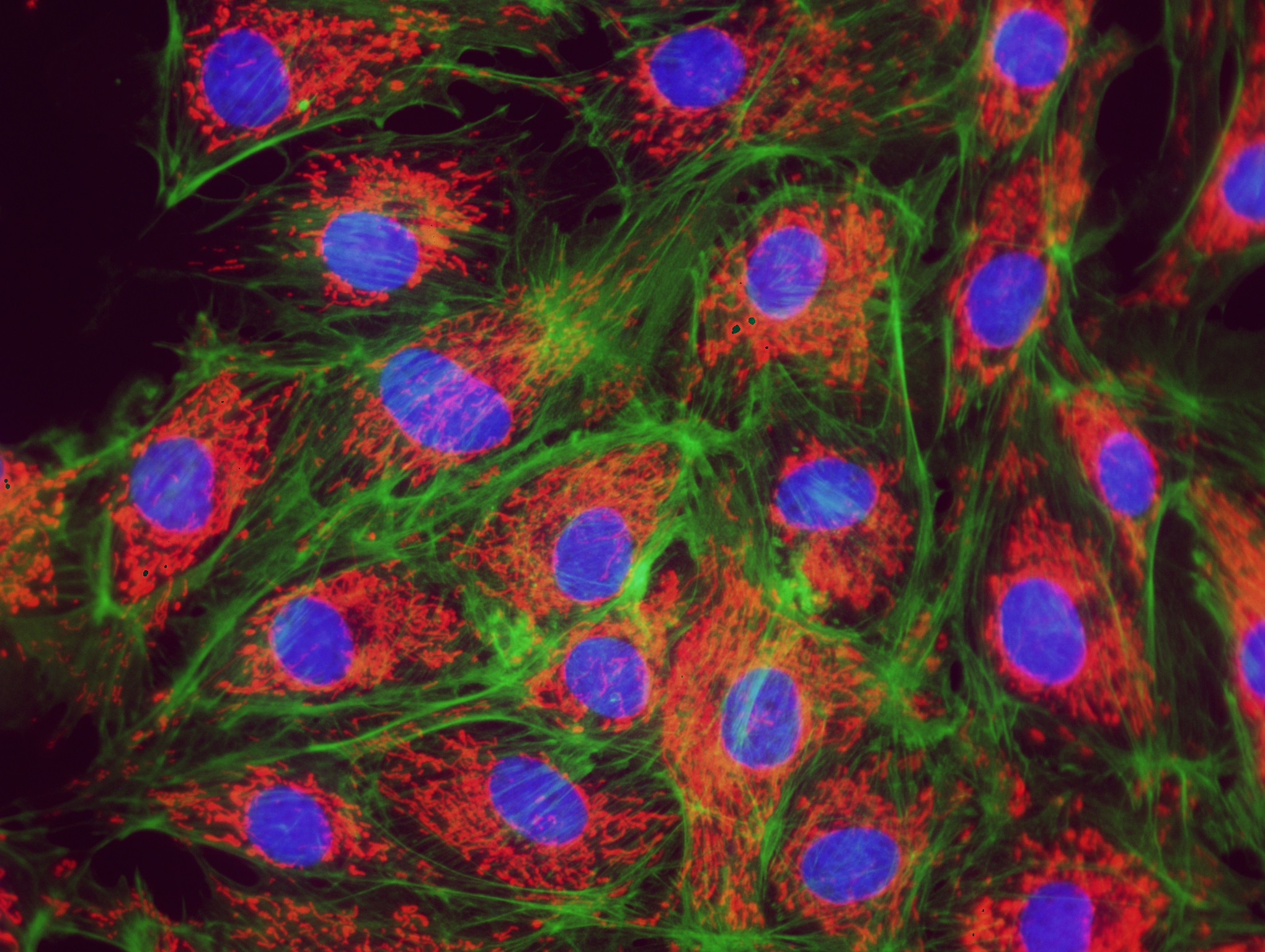
Fluorescence microscopy is a powerful imaging technique that allows researchers to observe and study biological and material samples with exceptional clarity. Unlike traditional light microscopy, which relies on reflected or transmitted light to visualize specimens, fluorescence microscopy uses fluorophores—molecules that emit light when excited by specific wavelengths—to highlight structures, proteins, and other cellular components.
In fluorescence microscopy, a fluorescent light source illuminates the sample with light of a specific wavelength, exciting the fluorophores within the specimen. These fluorophores then emit light at a longer wavelength, which is captured by the microscope, creating high-contrast, detailed images. This technique is widely used across the life sciences, materials science, and industrial inspection, offering insights that would be impossible to achieve with conventional microscopy.
UK : +44 (0)1264 323040
Call Us Now – We’re Here To Help
When calling it would be useful to have the following information:
Your Name
Company Name (If Applicable)
Email Address
Your Microscopy Illumination Requirements
Request A Callback
How Does Fluorescence Microscopy Work?
The process of fluorescence microscopy involves several key steps:
Excitation: The microscope light source emits light of a specific wavelength, exciting the fluorophores in the sample.
Emission: Excited fluorophores release light at a longer wavelength, known as the emission wavelength.
Detection: The microscope filters out the excitation light and captures only the emitted fluorescence, generating a clear, high-contrast image.
To achieve optimal imaging, the choice of fluorescence microscopy equipment, including the light source, is critical. Modern advancements in illumination technology have transformed fluorescence microscopy, improving image quality while enhancing safety and sustainability.
The Evolution of Fluorescence Microscopy Light Sources
Historically, fluorescent light sources for microscopy relied on halogen and mercury arc lamps. While effective, these traditional light sources had several significant drawbacks:
High Heat Output: Halogen and mercury bulbs generated intense heat, posing a risk to delicate samples.
Short Lifespan: Frequent bulb replacements increased running costs and downtime.
Inconsistent Illumination: The intensity and stability of older light sources varied, affecting image quality.
Fortunately, the rise of LED light sources has revolutionised fluorescence microscopy, offering a safer, more efficient, and environmentally friendly alternative.
Why LED Light Sources Are the Future of Fluorescence Microscopy
Modern LED light sources have rapidly become the standard for fluorescence microscopy, offering numerous advantages over traditional illumination systems:
Superior Stability and Intensity: LED light sources provide consistent illumination throughout imaging sessions, ensuring reliable results.
Extended Lifespan: LEDs last tens of thousands of hours, significantly reducing maintenance and replacement costs.
Energy Efficiency: Compared to mercury or halogen bulbs, LEDs consume far less power while delivering superior light output.
Minimal Heat Output: Low heat generation protects sensitive samples from thermal damage during extended imaging.
Environmentally Friendly: LED light sources are mercury-free, reducing environmental impact and simplifying disposal.
Precise Wavelength Control: Multi-channel LED systems allow users to select specific wavelengths for excitation, improving imaging flexibility.
These benefits make LED fluorescence microscopy light sources indispensable for modern research and industrial applications.
Fluorescence microscopy plays a pivotal role in numerous scientific disciplines and industrial sectors. Some of the most common applications include:
Life Sciences
Cell Biology: Visualising organelles, cytoskeletal structures, and protein dynamics in live and fixed cells.
Cancer Research: Identifying biomarkers and studying tumor microenvironments.
Neuroscience: Mapping neural networks and synaptic activity.
Genetics: Tracking gene expression and chromosomal structures.
Materials Science
Polymer Science: Investigating material composition and structural integrity.
Nanotechnology: Characterising nanoparticles and advanced materials.
Surface Analysis: Examining coatings and microstructures.
Industrial Inspection
Semiconductor Manufacturing: Detecting defects in microelectronics.
Pharmaceutical Quality Control: Ensuring consistency in drug formulations.
Textile and Polymer Inspection: Identifying flaws in manufactured goods.
Whether used for cutting-edge biological research, advanced material characterisation, or industrial quality assurance, fluorescence microscopy equipment powered by LED light sources delivers unmatched performance.
Our Contribution to Fluorescence Microscopy
At CoolLED, we are proud to lead the way in LED illumination for fluorescence microscopy. Our innovative light sources, such as the pE-400 Series and pE-800 Series, provide researchers and industrial users with unparalleled control, efficiency, and performance.
Key Features of CoolLED Light Sources
High Intensity and Uniform Illumination: Ensures even excitation across the entire field of view.
Fast Switching: Instant on/off functionality for rapid, multi-channel imaging.
Broad Wavelength Range: Supports a wide range of fluorophores for flexible experimental design.
Compact Design: Easily integrates with existing fluorescence microscopy systems.
User-Friendly Control: Intuitive software and hardware interfaces streamline operation.
By replacing outdated mercury and halogen bulbs with CoolLED’s LED microscopy light sources, researchers can achieve superior results while promoting sustainability and laboratory safety.
Driving Discoveries in Fluorescence Microscopy
Fluorescence microscopy continues to transform scientific discovery and industrial innovation. As researchers push the boundaries of what is possible, the importance of reliable, high-performance light sources cannot be overstated.
CoolLED’s LED illumination systems empower scientists, engineers, and quality control specialists worldwide, delivering the precision, flexibility, and efficiency needed for groundbreaking work.
Whether you’re exploring cellular structures, developing new materials, or ensuring product quality, CoolLED provides the fluorescence microscope light source you can trust.
Contact us today to learn how our cutting-edge LED solutions can enhance your fluorescence microscopy applications.