GT Vision launches an affordable fluorescence workhorse:
The GX Microscopes XDS400 paired with CoolLED’s pE-300 Series
GT Vision, one of the UK’s most experienced microscope specialists and one of our fantastic resellers, has added a ready-to-go fluorescence package to its line-up.
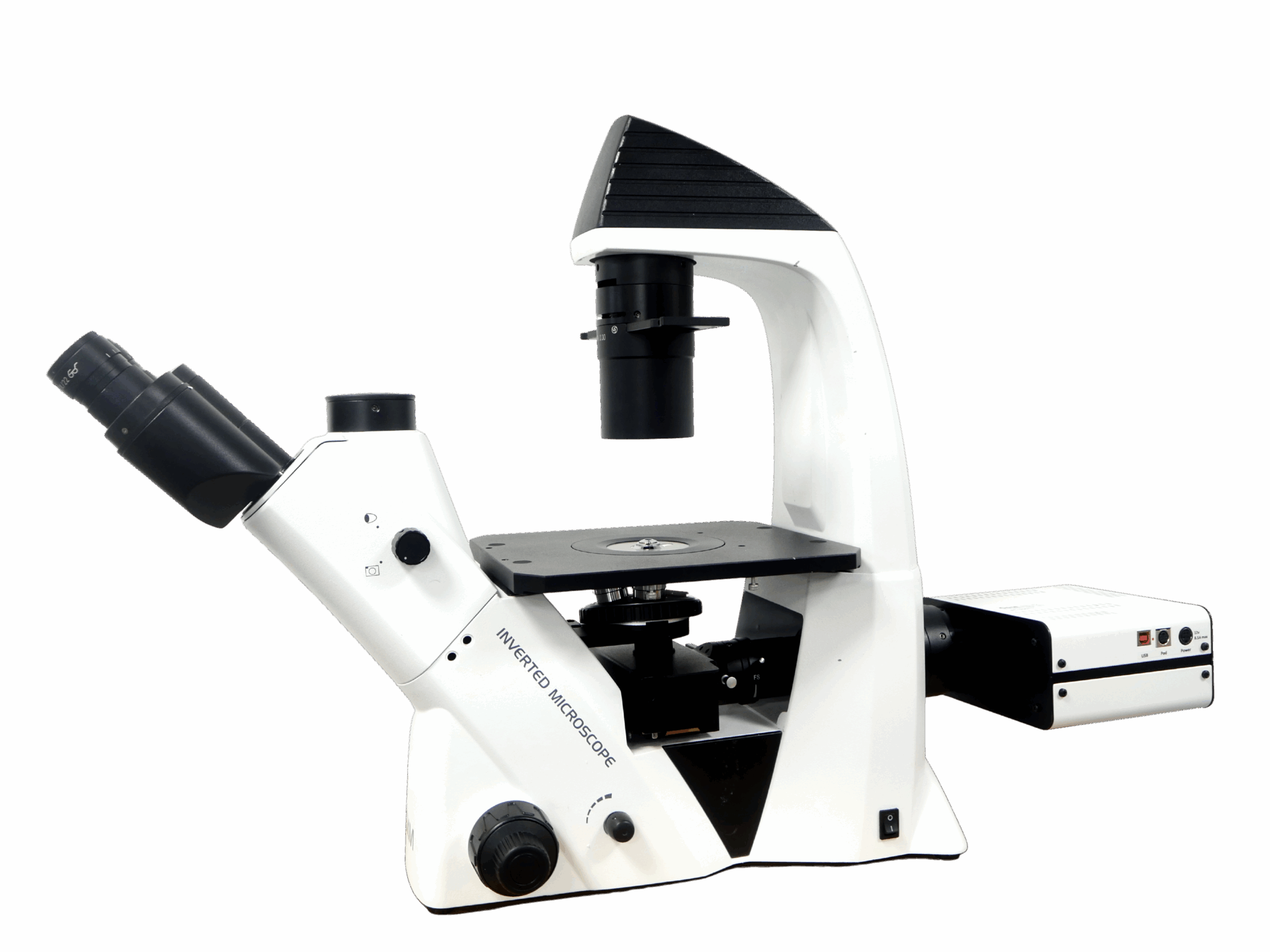
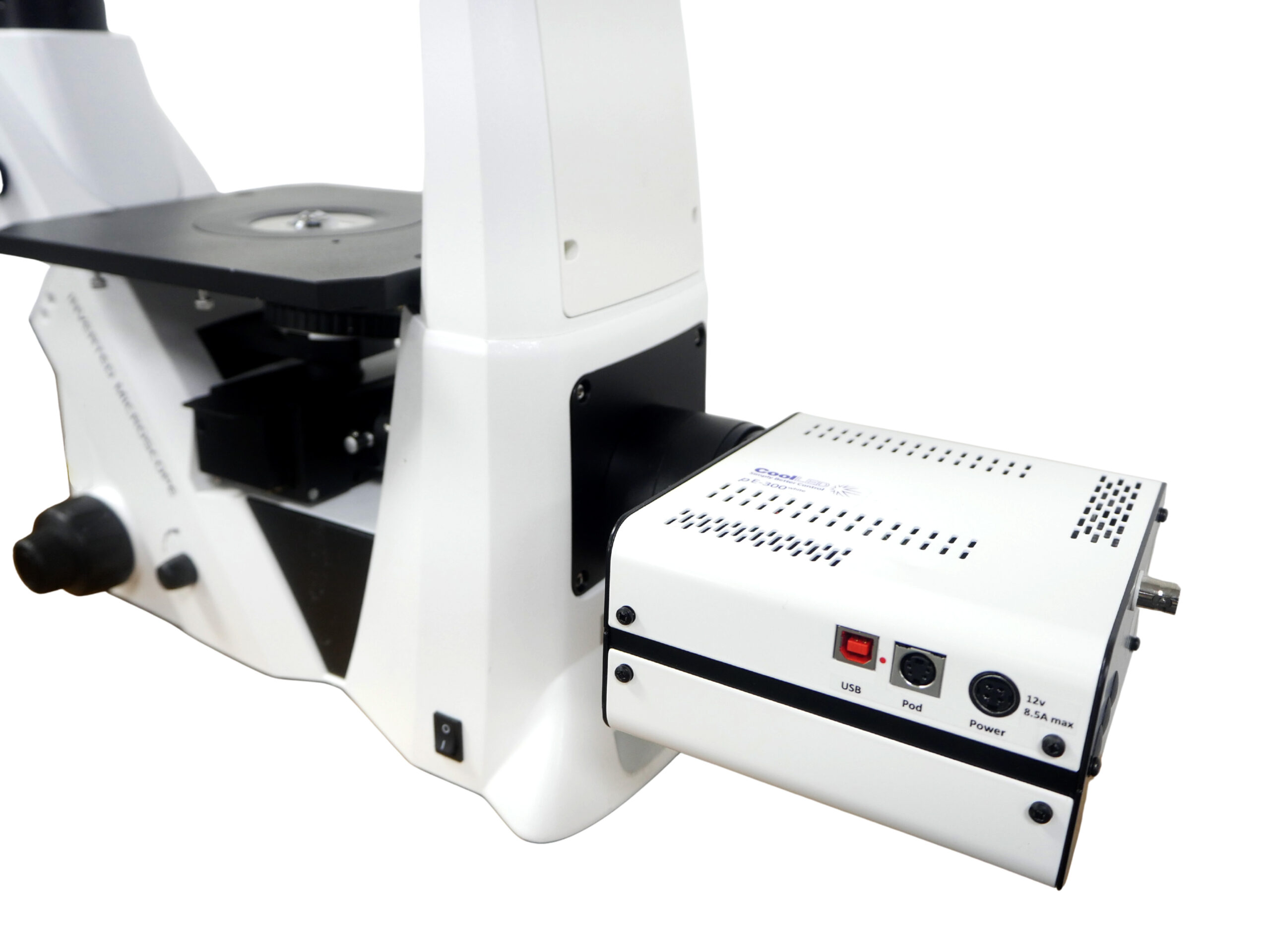
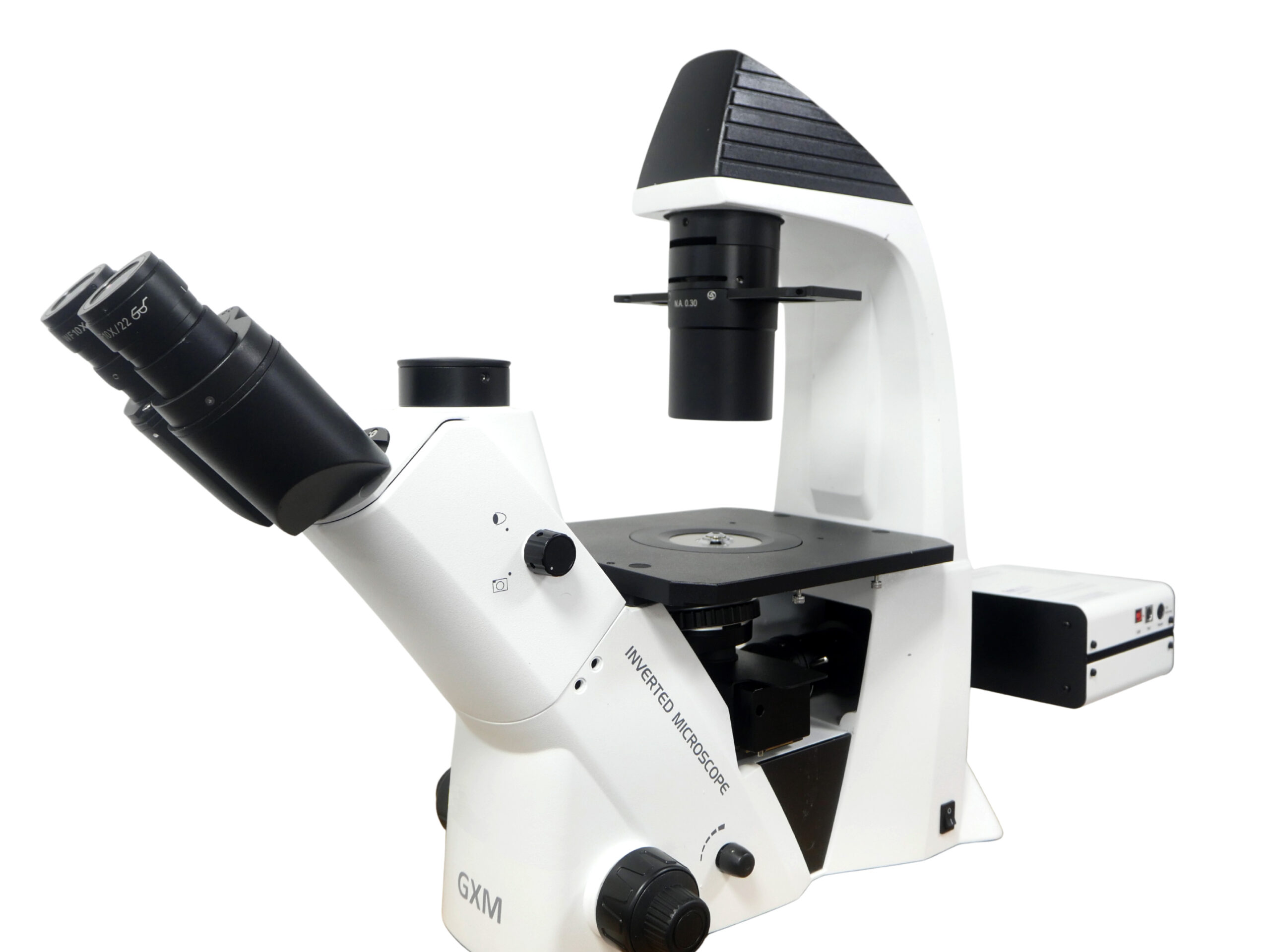
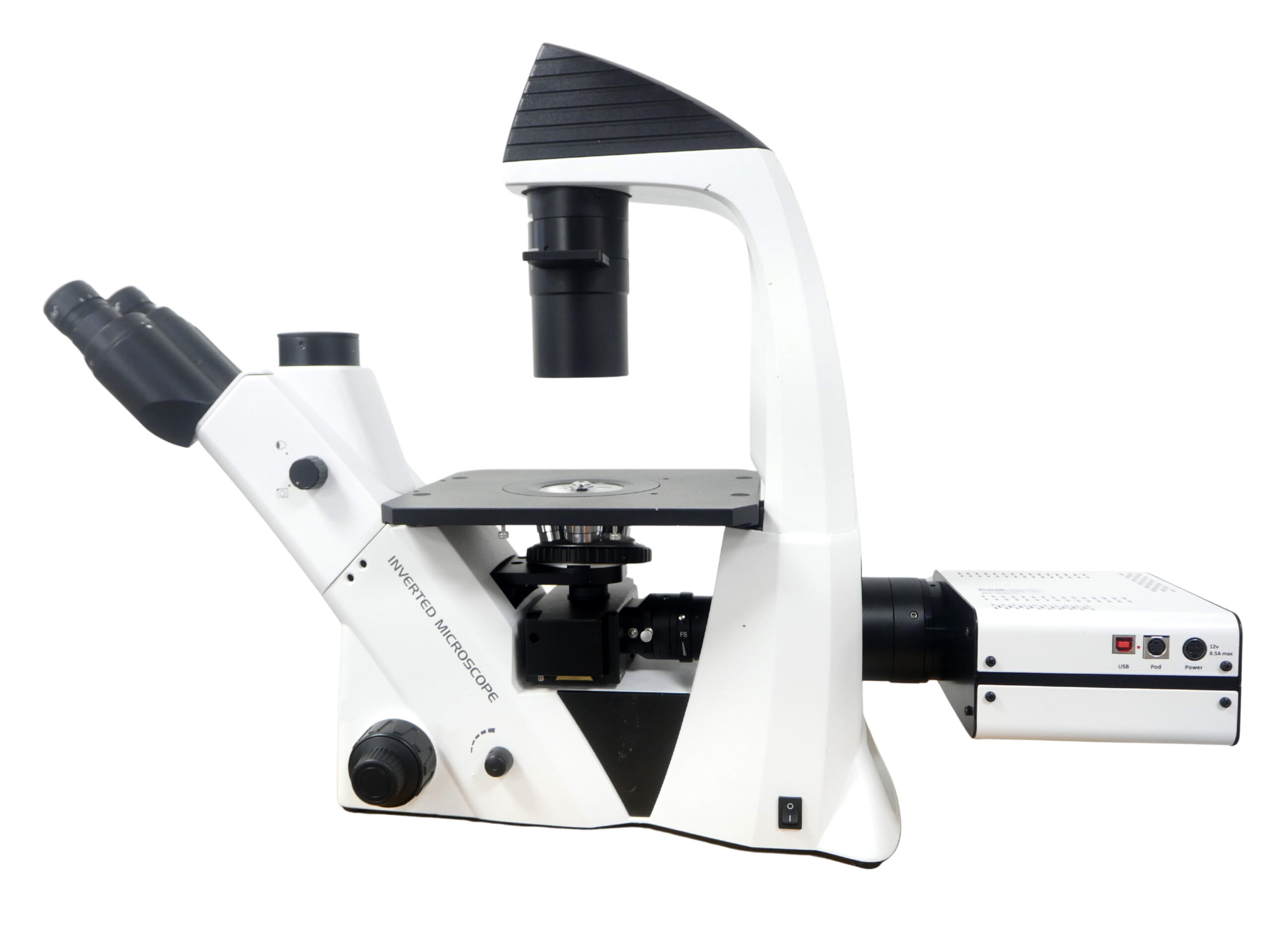
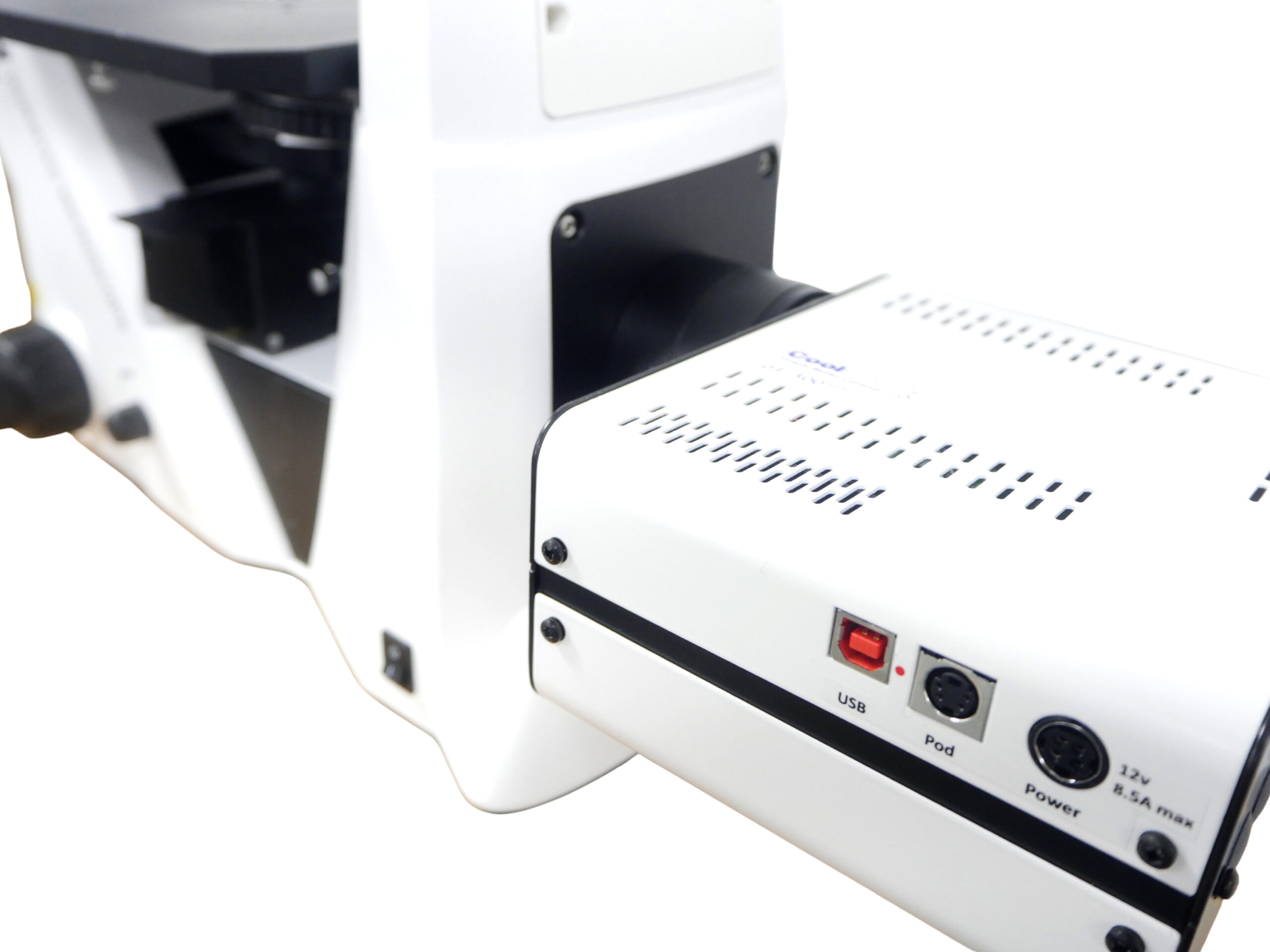
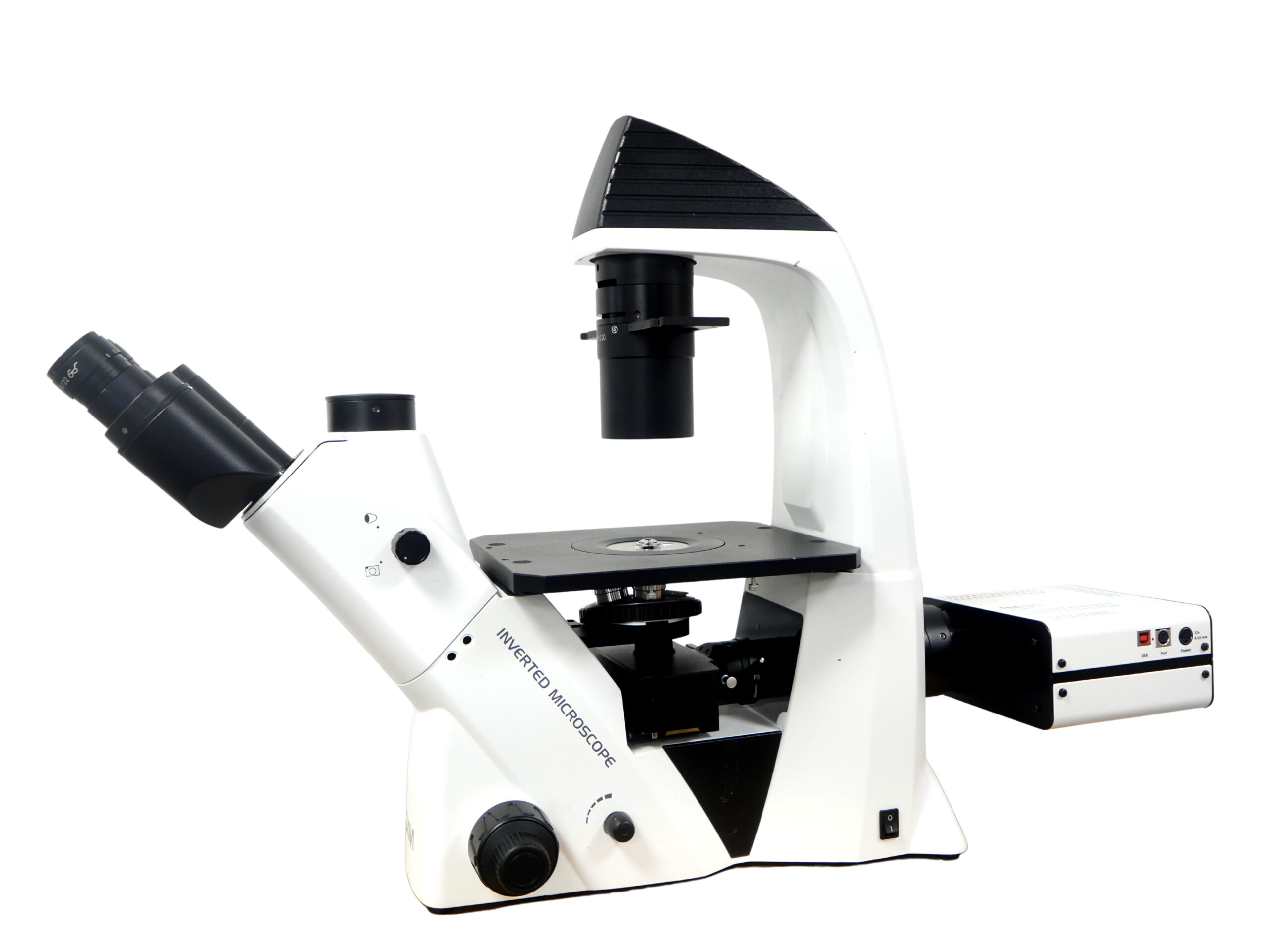
By bringing together the compact GX Microscopes XDS400 inverted microscope and a CoolLED pE-300 LED Illumination System, the company is offering research groups, teaching labs and start-ups a powerful yet budget-friendly route into fluorescence imaging.
A microscope that respects your bench space and your budget
The ultra-modern stand is both versatile with an integral camera port for record keeping, a range of sample holders and attachable mechanical stage.
The compact design minimises bench space requirements in busy tissue culture rooms.
- Compact footprint: can slot neatly between incubators, safety cabinets and stacks of plates.
- Research-grade optics in a small shell: 22 mm wide-field eyepieces, trinocular camera port and long-working-distance infinity objectives (4 ×, 10 ×, 20 ×, 40 × phase/bright-field) on a smooth five-place nosepiece.
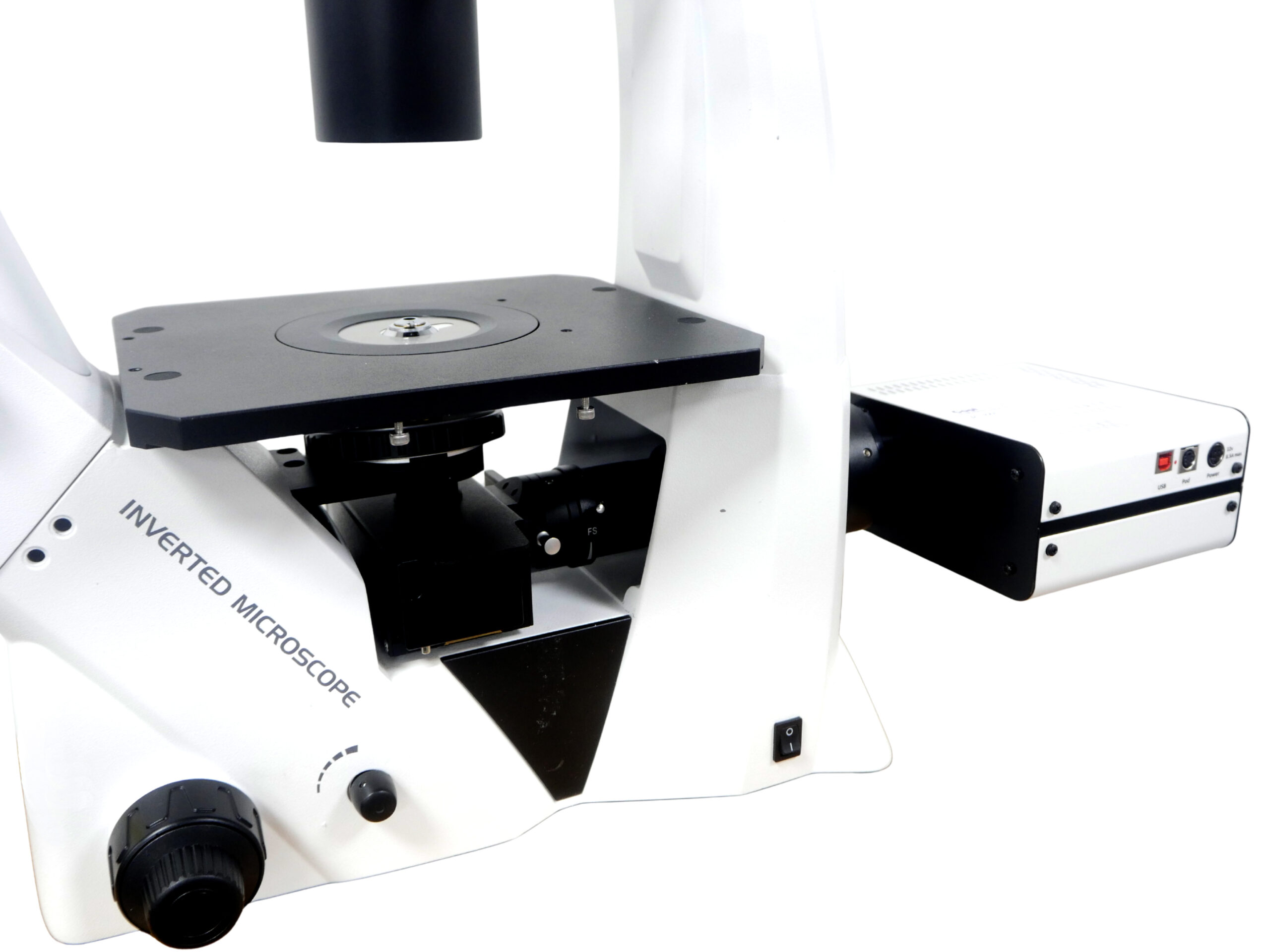
- Made for multi-user rooms: a 210 × 241 mm stage with 128 × 80 mm travel fits dishes, flasks and multi-well plates; robust coaxial focus and a sample-protection stop stand up to daily hand-overs.
- Start simple, upgrade later: the built-in 5 W transmitted LED covers routine phase-contrast; fluorescence can be added when budgets or projects allow.
Why LEDs now dominate fluorescence illumination
- No bulbs, no waiting: the CoolLED pE-300white (or even more budget-friendly pE-300lite) turns on instantly, needs no alignment and runs for tens of thousands of hours.
- Lower running costs and heat: drawing considerably less power than a mercury or metal halide bulb, using LEDs keeps energy bills and sample temperatures down.
- Stable light for reliable data: with no moving parts, output is flicker-free – ideal for quantitative assays or long time-lapse runs.
- Broad spectral coverage: a single unit excites common dyes from DAPI and FITC through TRITC to Cy5, so one illuminator serves most day-to-day protocols.
Typical applications
- Routine cell-culture QC: Verify mycoplasma staining, track transfection efficiency or check confluence before splitting.
- Live-cell imaging on a budget: LED stability and low radiant heat support time-lapse studies without expensive environmental chambers.
- Teaching laboratories: Students can observe multi-colour slides without waiting for arc-lamp cool-down, maximising hands-on time during practical classes.
- Small-molecule screening: The generous stage travel accommodates 96-well plates, ideal for fluorescence-based drug or toxicity assays.
- Basic developmental or plant biology: Long-working-distance objectives and phase-contrast make the scope suitable for zebrafish embryos, Arabidopsis roots and other thicker specimens.
Tackling everyday pain points in busy facilities
| Pain point | How the XDS400 + pE-300 solves it |
| Bench-space squeeze | Compact microscope stand and LED light source free up room for incubators, water baths and laptop controllers. |
| Lamp alignment & consumables | No bulb alignment or mercury disposal; LEDs have >25 000 h typical lifetime. |
| User cross-contamination | Sealed LED module avoids broken-glass incidents and eliminates UV-leak hazards. |
| Turn-around pressure | Instant LED start-up means no 20-minute warm-up between users; classes and shared labs stay on schedule. |
| Budget constraints | Low entry price of XDS400 plus negligible running costs of a pE-300 Series Illumination System keep total cost of ownership predictable. |
Sustainability matters
Our pE-300 series carries an ACT environmental label, documenting manufacturing impact, energy use and end-of-life management. For facilities managers charged with delivering greener science, swapping mercury burners for LEDs is one of the simplest ways to cut hazardous waste and power consumption.
Backed by GT Vision expertise
As a multi-brand reseller, GT Vision is positioned to advise on cameras, software and sample-handling accessories that complete the workflow. The company’s technical team can install the XDS400-pE-300 combination, train staff and provide responsive after-sales support, which is critical when instruments are shared across departments with varying levels of experience.

A practical step into fluorescence
For many labs the question is not whether fluorescence microscopy would enhance their research, but whether they can justify the space and budget. By combining the small-footprint XDS400 with the energy-efficient pE-300 Series, GT Vision has lowered both barriers. The result is a versatile, easy-to-use platform that lets scientists focus on their biology rather than their equipment.
For pricing, demonstrations or a tailored quotation, contact GT Vision on +44 (0)1284 789 697 or visit their website for more details.